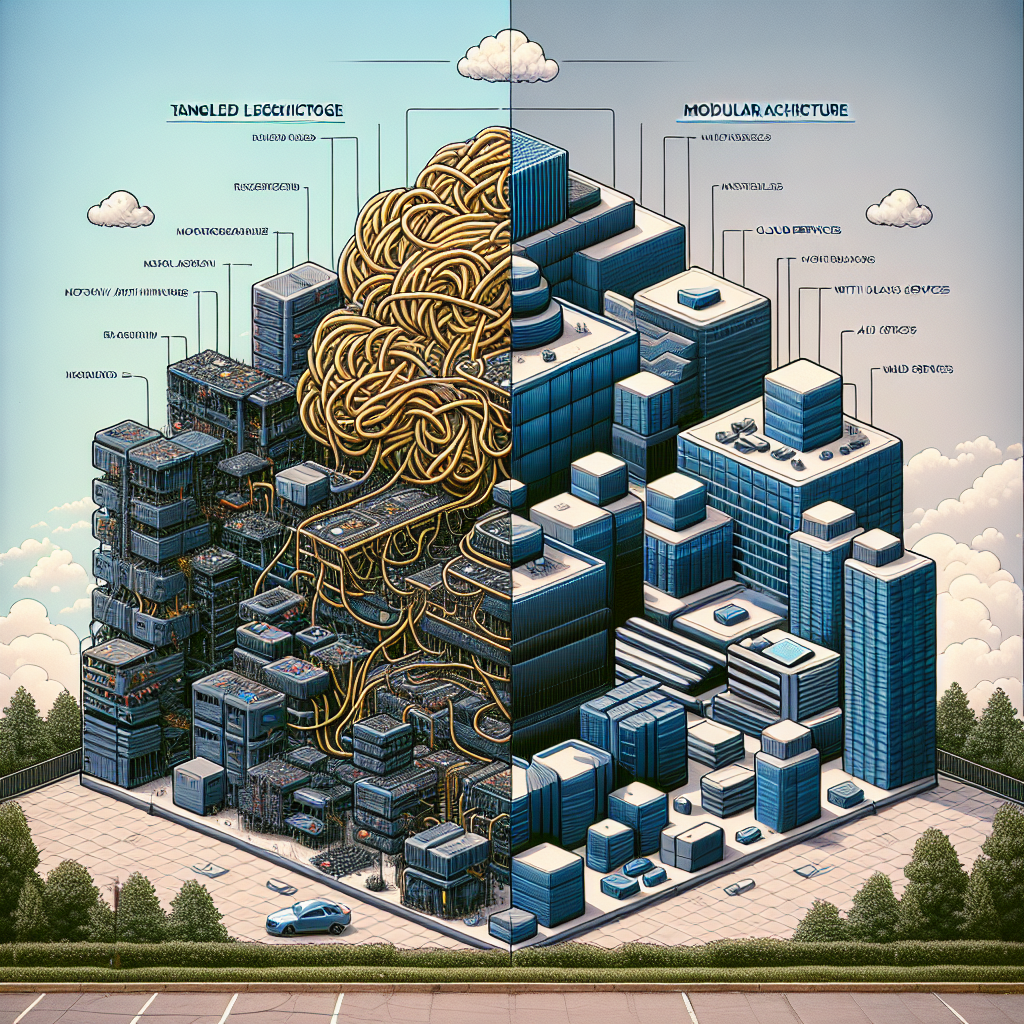
Many organizations still run critical operations on systems built 10, 15, even 20 years ago. Those applications may be stable, but they’re slow to change, hard to integrate, and expensive to support. Legacy application modernization services exist to help you update these systems in a controlled, cost-conscious way—without putting your business at risk. Table of Contents
- What legacy application modernization services actually cover
- Business risks of staying on legacy systems too long
- Core modernization strategies and how to choose among them
- Designing a practical roadmap for modernization at your pace
- Architecture, cloud, and integration priorities that truly matter
- Building the right team and governance for modernization success
Key Takeaways
| Key Point | Why It Matters | What You Should Do |
|---|---|---|
| Modernization is a business strategy, not just a tech upgrade | Decisions affect revenue, risk, and competitiveness for years | Tie legacy application modernization services to clear business outcomes and KPIs |
| There’s no one-size-fits-all modernization path | Wrong strategy can increase cost and disruption | Assess each system and pick refactor, rehost, or replace based on value and risk |
| Governance and team structure drive success | Poor coordination causes overruns and failed releases | Create a cross-functional team with staged delivery, metrics, and executive backing |
1. What legacy application modernization services actually cover
Legacy application modernization services help you transform aging, business-critical systems into more secure, scalable, and adaptable platforms. That might mean rehosting a mainframe workload to the cloud, refactoring a monolith into modular services, or fully replacing a custom application with a modern SaaS solution. The goal isn’t just new technology; it’s reducing risk and enabling faster change across your organization. Managed Overseas Development Teams vs Freelancers:
A strong modernization partner starts with discovery: understanding business processes, dependencies, data flows, and constraints. From there, they propose modernization options with timelines, risk profiles, and cost projections. Services usually span assessment, architecture design, cloud migration, code remediation, data migration, integration, testing, and ongoing support. And because every company has different risk tolerance, good providers offer phased approaches rather than a single big bang. Top MVP Development Services for Entrepreneurs:
You should expect legacy application modernization services to address not only code and infrastructure but also monitoring, documentation, security controls, and knowledge transfer for your internal team. When done correctly, modernization becomes an investment that reduces total cost of ownership while making your systems easier to evolve.
- Assessment and roadmap development
- Application refactoring, rehosting, or replacement
- Data migration and integration modernization
- Security hardening and compliance alignment
- Ongoing support and performance tuning
*Pro tip: Ask prospective partners to show a concrete before-and-after system diagram from a past modernization, not just a slide deck of methodologies.# 2. Business risks of staying on legacy systems too long
Legacy platforms usually don’t fail overnight. They degrade slowly: higher maintenance costs, more outages, and longer release cycles. Studies show IT teams spend as much as 70–80% of their time on maintenance for older systems, leaving little capacity for innovation. When critical knowledge lives in a few senior engineers’ heads, retirement or turnover becomes a material operational risk.
Security exposure is another major concern. Unsupported operating systems, end-of-life databases, and unpatched frameworks increase the likelihood of breaches. Public incidents regularly highlight how attackers exploit unpatched legacy vulnerabilities, as detailed in reports from organizations like the Cybersecurity and Infrastructure Security Agency. Regulatory expectations also rise over time, and older systems often lack the logging, encryption, and access controls needed for modern compliance regimes.
Competition adds pressure. Your customers now expect digital experiences that are personalized, fast, and available on any device. If your core systems can’t integrate with modern analytics, APIs, and cloud-native services, you’ll struggle to deliver those experiences at a sustainable cost. Legacy application modernization services directly address these risks by making your systems safer, more flexible, and easier to enhance.
- Escalating maintenance and support costs
- Reliance on shrinking legacy skill sets
- Increased security and compliance risk
- Slower time-to-market for new features
*Pro tip: Quantify risk in financial terms—downtime cost, incident cost, and lost opportunities—to build a compelling modernization business case.# 3. Core modernization strategies and how to choose among them
Choosing the right path is where many initiatives stumble. Legacy application modernization services typically draw from a spectrum of strategies, often described as the "7 Rs": retain, retire, rehost, replatform, refactor, re-architect, and replace. You won’t apply one strategy to everything; you’ll mix them across your portfolio based on business value and technical constraints.
For a stable application that mainly needs cost reduction, rehosting or replatforming to cloud infrastructure may be enough. Systems with severe maintainability or scalability issues often benefit from refactoring into modular services or re-architecting around domain boundaries. In some cases, especially for commodity capabilities like HR or CRM, full replacement with a commercial SaaS platform is more efficient than modernizing custom code.
The key is treating modernization as a portfolio decision, not an all-or-nothing move. Prioritize applications by business criticality, change frequency, technical debt, and user impact. Legacy application modernization services providers should help you score systems against these dimensions and propose a tailored mix of strategies.
| Strategy | Best For | Benefits | Typical Trade-Offs |
|---|---|---|---|
| Rehost | Stable apps with aging infrastructure | Faster migration, lower infra cost | Limited code improvement, some lock-in may remain |
| Refactor / Re-architect | Core systems needing agility and scale | Improved maintainability, performance, and flexibility | Higher upfront effort and complexity |
| Replace with SaaS | Commodity, non-differentiating capabilities | Reduced maintenance, faster feature access | Customization limits and vendor dependence |
| *Pro tip: Start with one or two pilot applications that represent common patterns, then reuse the lessons and tooling across your portfolio.# 4. Designing a practical roadmap for modernization at your pace |
A roadmap connects strategy to execution. Rather than planning a multi-year, all-encompassing project, effective legacy application modernization services break change into manageable, value-driven increments. Each phase should deliver visible benefits—reduced infrastructure cost, faster response times, or a specific new capability—while reducing risk for the next step.
You’ll want three views: a business roadmap, a technical roadmap, and a dependency map. The business roadmap ties releases to outcomes such as entering a new market or improving order processing throughput. The technical roadmap details migrations, refactors, and integrations by quarter. The dependency map shows which systems, teams, and vendors are touched by each change, helping you avoid bottlenecks.
Many organizations combine modernization with new product initiatives. For example, when launching a new SaaS offering or MVP, they simultaneously decouple key services from legacy systems. If you’re exploring new products, resources like Top MVP Development Services for Entrepreneurs: can help you align innovation with the underlying modernization work.
- Identify and rank applications by business impact and technical health.
- Define target states (cloud, modular services, SaaS) for each major system.
- Slice work into quarterly milestones with measurable outcomes.
- Plan parallel tracks: infrastructure, application code, and data migration.
- Review and adjust the roadmap every 3–6 months based on results.
*Pro tip: Time your highest-risk migrations for periods of lower business activity, and build in explicit rollback plans for every major release.# 5. Architecture, cloud, and integration priorities that truly matter
Modernization isn’t only about moving to the cloud; it’s about achieving a flexible architecture that can support change. Legacy application modernization services commonly introduce domain-driven designs, APIs, and event-driven patterns that decouple systems. This reduces the blast radius of changes and lets teams ship updates independently. Cloud-native services—such as managed databases and message queues—further reduce operational overhead.
Integration strategy is central. Point-to-point interfaces, batch file transfers, and custom adapters are fragile and hard to scale. Moving toward standardized APIs, message buses, or integration platforms simplifies future changes and analytics. Authoritative sources like the documentation on modern API design from the OpenAPI Initiative provide solid technical guidelines that your teams can adopt.
Security and observability must be designed in from the start. That includes identity and access management, encryption in transit and at rest, audit logging, and centralized monitoring. Reliable telemetry lets you detect issues early, understand behavior after releases, and continuously improve your systems. Well-architected modernization also makes regulatory compliance checkpoints—such as those summarized on major .gov cybersecurity portals—easier to achieve and maintain.
- Favor modular, domain-aligned architectures over monolithic designs
- Standardize on APIs and events rather than bespoke integrations
- Use managed cloud services where they reduce cognitive load
- Bake in observability and security controls from day one
*Pro tip: Create a lightweight architecture review process that evaluates new changes against a concise set of principles, not a heavy checklist.# 6. Building the right team and governance for modernization success
Even the best roadmap fails without the right people and governance. Successful legacy application modernization services combine product owners, architects, senior engineers, QA, security, and operations into stable, cross-functional teams. These teams own specific domains end-to-end, from backlog to production monitoring, which sharply reduces handoff delays and miscommunication.
You’ll also face a resourcing choice: grow internal capabilities, bring in specialized consultants, or use managed overseas development teams. Many organizations compare Managed Overseas Development Teams vs Freelancers: to understand cost, reliability, and governance differences. For high-stakes modernization, consistent teams with proven processes typically outperform ad hoc freelancer arrangements, even if headline rates are higher.
Governance should be just enough to keep risk under control while preserving speed. That usually means clear decision rights, regular steering meetings with business and IT leadership, and a focused set of metrics—deployment frequency, change failure rate, availability, and business KPIs like order completion time. External benchmarks from sources such as the DORA research on software delivery performance can help you set realistic, evidence-based targets.
- Assign a single executive sponsor accountable for modernization outcomes.
- Create domain-focused, cross-functional delivery teams.
- Define a small, meaningful set of engineering and business metrics.
- Review progress and risks on a predictable cadence with leadership.
- Invest in training so internal teams can own the modernized stack.
*Pro tip: Make at least one senior business stakeholder a standing member of the governance group so trade-offs are made with full commercial context. Treat modernization as a strategic, staged investment in your future
Legacy application modernization services aren’t about chasing the latest technology trend. They’re about reshaping the systems that quietly run your revenue, compliance, and customer experiences so they can support your next decade of growth. By addressing mounting risk, reducing maintenance drag, and enabling faster delivery, modernization directly supports both top-line and bottom-line objectives.
The organizations that succeed approach modernization as a disciplined, staged program. They align each step to business outcomes, choose strategies system by system, and build cross-functional teams with the right mix of internal and external expertise. They also recognize that modernization isn’t a one-time project; it’s an ongoing capability that keeps their application landscape healthy and adaptable.
If you’re evaluating how to modernize your own systems, start by sizing the risk and opportunity, then design a roadmap that your business can absorb. The right legacy application modernization services partner will help you execute with less disruption, clearer metrics, and a sharper focus on value, not just technology change.
Review your top three legacy applications, quantify their operational and risk costs, and engage a modernization partner to explore phased options grounded in clear business outcomes.