
Remote development teams have unlocked new levels of flexibility, talent access, and cost savings for businesses of all sizes. But with this global reach comes a new challenge: ensuring security across time zones, devices, and sometimes even personal networks. For companies like Digital Minds, where reliable overseas teams and remote collaboration are the norm, cost-effective security management isn’t just a technical necessity—it’s a strategic advantage.
Today, we’ll explore how startups, SMBs, and enterprises can balance robust security with practical budgets, all while supporting productive remote developers. Let’s dive into actionable strategies that keep your data safe without breaking the bank.
The Security Risks of Remote Work
Remote developers often work outside the controlled confines of an office, introducing unique security risks. These range from unsecured Wi-Fi connections and device theft to accidental data leaks or targeted phishing attacks. The stakes are high: one security breach can derail product launches, erode customer trust, and lead to costly legal consequences.
When you add in the complexities of overseas teams—different regulations, cultural norms, and sometimes less direct oversight—security management can feel overwhelming. But the good news is that you don’t have to choose between strong security and lean budgets. The key is understanding the unique risk landscape and tailoring solutions to fit.
Pro tip: Start by mapping out your most sensitive assets (source code, credentials, customer data). Knowing what’s at stake helps prioritize your security spend.
Building a Secure Remote Developer Environment
A secure remote development environment is built from a blend of technology, policy, and culture. Let’s break down what this looks like in practice:
First, enforce strong authentication. Multi-factor authentication (MFA) is a low-cost, high-impact tool that reduces the risk of credential theft. Make it standard for all remote developers accessing code repositories, CI/CD pipelines, or management dashboards.
Second, leverage virtual private networks (VPNs) or zero-trust network access (ZTNA) tools. These ensure encrypted connections, even over public Wi-Fi, and can be deployed without expensive hardware.
Third, centralize code and documentation in cloud repositories with granular access controls. This allows you to quickly grant or revoke access as teams change, and it creates clear audit trails for compliance.
Finally, automate device management using mobile device management (MDM) or endpoint management tools. Affordable solutions exist for startups and SMBs, making it easy to enforce policies like disk encryption, remote wipe, and regular software updates.
Pro tip: When onboarding new developers, bundle security setup with their access process. It’s easier to build good habits from day one than to correct risky behaviors later.
Cost-Conscious Security Best Practices
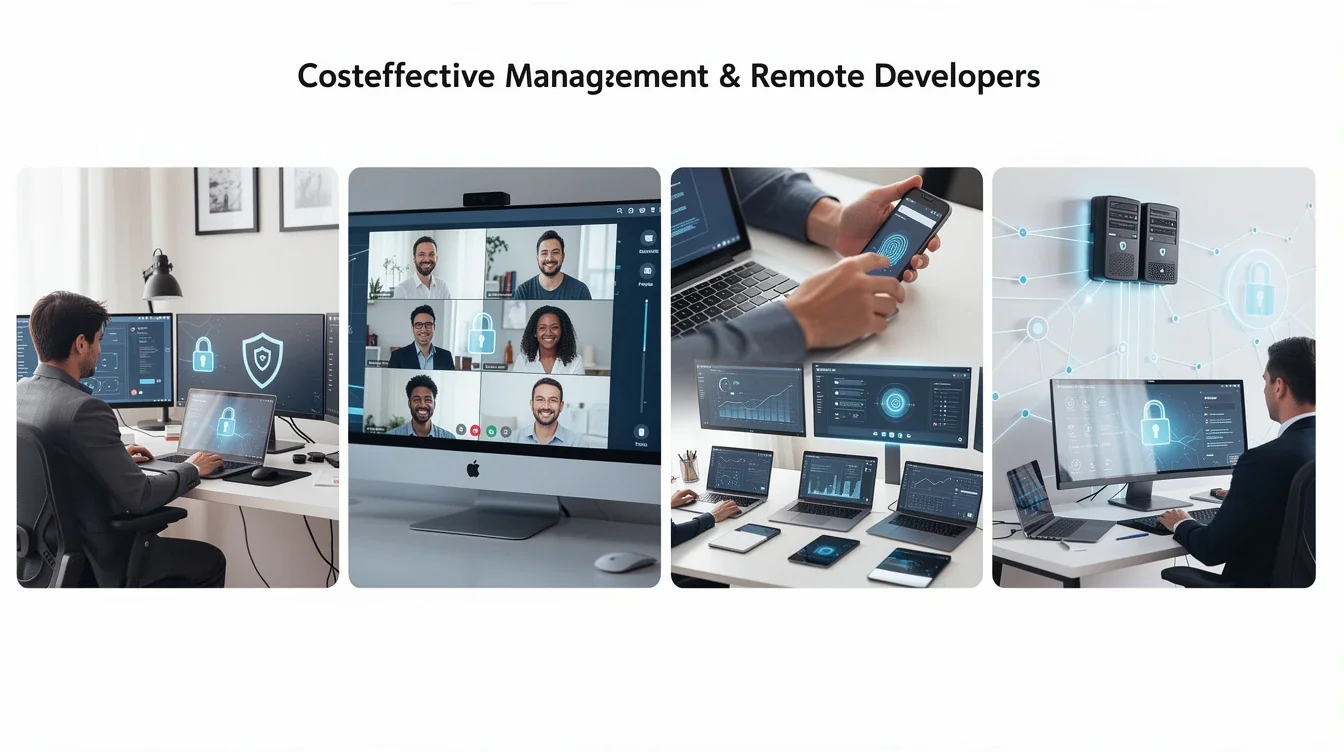
Security doesn’t have to be expensive. In fact, many best practices are low-cost or free, yet offer major protection for distributed teams.
First, invest in security awareness training. Phishing is still the leading cause of security incidents, and a well-trained team is your best defense. There are affordable, even open-source, training modules available that can be tailored to your remote workforce.
Second, use open-source security tools where possible. From intrusion detection to vulnerability scanning, there’s a vibrant ecosystem of free solutions that rival their commercial counterparts. Just make sure to choose actively maintained projects and invest in staff training.
Third, automate patch management. Keeping software up to date is one of the simplest ways to avoid attacks, and most modern operating systems support automatic updates.
Finally, segment your network and data. Even with remote teams, use permissions and roles to limit access. Not every developer needs access to production data or customer records.
Pro tip: Schedule regular “security sprints” where your team reviews permissions, updates dependencies, and tests their incident response plan. These bite-sized efforts pay off in resilience.
Managing Overseas and Distributed Teams
Security management gets trickier when your developers are in different countries, time zones, or legal environments. Yet this global approach is often the most cost-effective way to scale development talent.
Start by standardizing your security policies. Clear, written guidelines—preferably in simple language—help remote developers understand expectations, regardless of location. Make sure your policies address device use, password standards, code reviews, and incident reporting.
Next, choose productivity tools with strong security features. Many cloud-based project management and source control platforms offer built-in compliance, access controls, and audit logs. Opting for these “secure by default” tools is often cheaper than custom solutions or retrofitting security later.
Finally, stay aware of data residency and compliance requirements. Some countries have strict rules about where data can be stored or processed, which can impact your choice of cloud providers and workflows. Work with legal advisors familiar with cross-border tech regulations—it’s a wise investment that can prevent costly missteps.
Pro tip: Build a relationship of trust with overseas teams. When developers feel comfortable raising security questions or reporting mistakes, your incident response is faster and more effective.
Scaling Security with Your Business
As your business grows, so do your security needs—and your budget flexibility. The trick is to scale security measures in step with team size and project complexity, avoiding both under-protection and unnecessary spend.
Early on, focus on secure defaults and automation. As you grow, layer on more advanced tools like security information and event management (SIEM) platforms, automated compliance reporting, and regular penetration testing. For critical projects, consider third-party security audits or bug bounty programs—these can be surprisingly affordable and offer strong ROI.
Don’t forget that people are at the heart of security. Invest in ongoing training, clear communication, and feedback loops. Make security a part of your culture, not just a checklist.
Pro tip: Track security metrics (like incident response times, number of vulnerabilities found, or training completion rates) alongside your usual KPIs. This quantifies your progress and helps justify security investments to stakeholders.
Conclusion
Cost-effective security management for remote developers isn’t about cutting corners—it’s about making smart, strategic choices that balance risk, productivity, and growth. By combining affordable technology, strong policies, and a culture of security, you’ll empower your distributed teams to build and scale safely.
At Digital Minds, we believe that a secure remote workforce is a foundation for innovation. With the right mix of tools and habits, you can protect your assets, satisfy clients, and support global collaboration—without draining your budget.