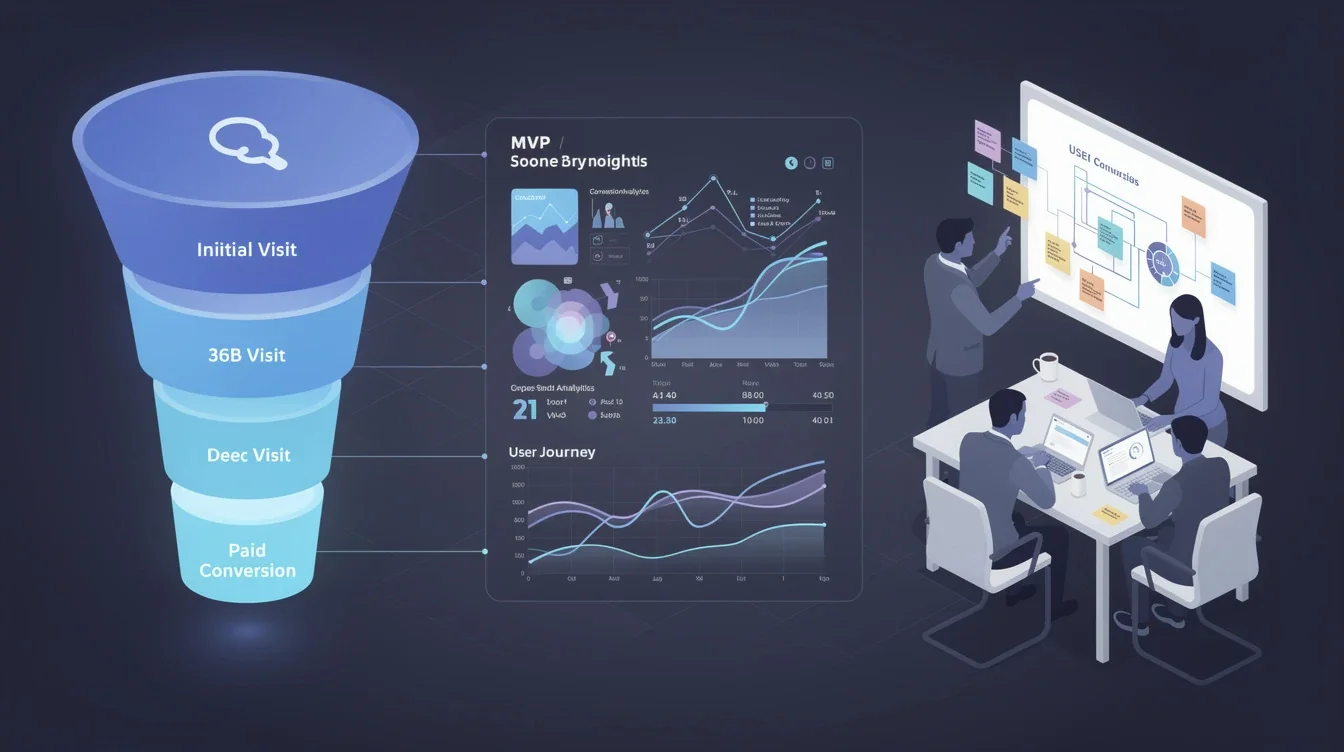
Launching a Minimum Viable Product (MVP) can be an exhilarating ride—fast-paced, data-driven, and full of tough decisions. But once your MVP hits the market, how do you know if it's on the path to product-market fit? The answer lies in understanding how users actually move through your product. Analyzing your user behavior funnel is the key to finding friction points, uncovering opportunities, and growing smarter—without blowing your budget. At Digital Minds, we believe that practical, actionable funnel analysis is the secret weapon for startups aiming to build, measure, and learn their way to success.
What Is a User Behavior Funnel?

A user behavior funnel is a step-by-step visualization of how users interact with your product—from their first touchpoint to your most valuable actions (like sign-ups, purchases, or referrals). For MVPs, this funnel is less about vanity metrics and more about learning what truly matters.
Typically, your funnel starts with broad awareness (visiting your landing page), followed by activation (signing up or completing onboarding), engagement (using core features), and conversion (taking a key action). By breaking down these stages, you can spot where users drop off and why.
For startups, a well-defined funnel isn’t just about tracking numbers. It’s about validating your product’s core assumptions quickly and efficiently. If you’re seeing heavy drop-off before engagement, maybe your onboarding needs work. If users engage but don’t convert, perhaps your value proposition isn’t clear enough.
Pro tip: When mapping your MVP funnel, keep it lean and focused. Track the fewest steps necessary to draw actionable insights—don’t get lost in data overload.
Setting Up Your Behavior Funnel
Defining and tracking your funnel starts with clear thinking. What’s the single most important action you want users to take? For some products, it’s creating an account; for others, it’s posting content or making a purchase. Every step leading up to that action is a point in your funnel.
Start by listing out each major interaction from first touch to conversion. For a SaaS MVP, your funnel might look like:
- Landing page visit
- Sign-up or registration
- Onboarding completion
- First core action (like creating a project)
- Subscription or upgrade
Once you’ve mapped your funnel, it’s time to instrument your product. Use analytics tools (like Mixpanel, Amplitude, or Google Analytics) to track events at each step. Make sure your tracking is consistent and covers every user cohort.
For startups with limited engineering resources, Digital Minds recommends prioritizing event tracking on your highest-impact funnel steps first. You can always expand your analytics as you learn more about user behavior.
Pro tip: Don’t just measure the funnel in aggregate—segment by traffic source, device, or user persona. This helps you pinpoint which channels or audiences are underperforming and why.
Interpreting Funnel Drop-Offs
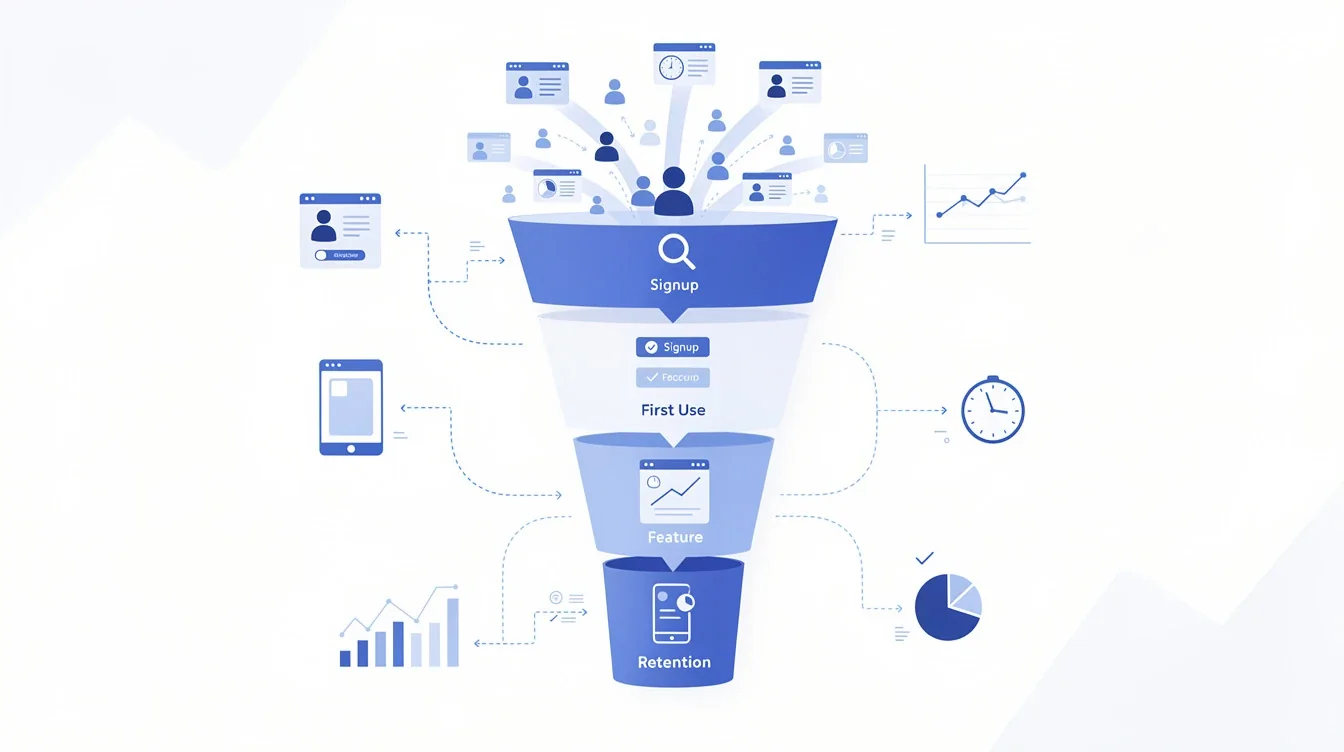
Once users start flowing through your MVP, you’ll notice drop-offs at each funnel stage. This isn’t just normal—it’s expected. The real value comes from interpreting these drop-offs and acting on them.
A steep drop after onboarding? Maybe your product’s first-use experience is confusing. Losing users before sign-up? Your landing page or offer might not be resonating. The key is to focus your team’s energy on the highest-drop points; these are your biggest opportunities for improvement.
Don’t take every drop-off at face value. Qualitative feedback (like user interviews or session recordings) can help reveal the “why” behind the numbers. Sometimes, friction is technical—a broken button or slow load time. Other times, it’s emotional—users don’t yet trust your product, or the value isn’t clear.
Pro tip: For every major funnel drop-off, run a quick experiment to address it. Small changes—a simpler form, clearer call to action, or a progress indicator—can make a big difference in early-stage user retention.
Using Funnel Insights to Guide Product Decisions
The best MVPs evolve rapidly based on real user data. Your behavior funnel isn’t just a report card—it’s a roadmap for what to do next.
If your funnel analysis shows strong engagement but weak conversion, double down on clarifying your value proposition or simplifying the upgrade path. If onboarding is the main hurdle, invest in better guidance, more education, or redesigning your first-time experience.
At Digital Minds, we encourage startups to make funnel reviews a regular habit. Each iteration should be informed by what you’ve learned about user behavior. This tight feedback loop lets you prioritize features, fix blockers, and allocate resources where they’ll have the greatest impact.
Pro tip: Share funnel insights with your whole team, not just product or marketing. Engineers, designers, and support staff all benefit from understanding where users struggle or succeed.
Common Pitfalls and How to Avoid Them
Funnel analysis can be a powerful tool, but there are traps to watch out for—especially in the MVP stage.
One common mistake is tracking too many metrics, leading to analysis paralysis. Focus on the core actions that define your product’s success. Another pitfall is chasing vanity metrics (like page views or downloads) rather than meaningful engagement or conversions.
It’s also easy to overlook qualitative context. Not all drop-offs are bad—sometimes users reach their goal faster than expected, or you’re attracting the wrong audience. Always pair your quantitative data with real user feedback to get the full picture.
Lastly, resist the urge to optimize prematurely. Your MVP is meant for learning, not perfection. Use your funnel to test hypotheses and iterate, not to chase incremental gains at the expense of big-picture insights.
Pro tip: Document your funnel learnings over time. When you pivot or scale, this record will help you avoid old mistakes and build on what’s already working.
When and How to Scale Your Analytics
As your product matures beyond MVP, your analytics should grow with you. Startups that scale effectively use their early funnel insights to build more advanced models—tracking cohort retention, feature adoption, and customer lifetime value.
At this stage, consider layering in event properties (like user type or plan tier) and using funnels to compare different segments. You might also automate reporting and set up alerts for abnormal drop-offs or spikes.
But don’t lose sight of simplicity. The best analytics setups empower your team to make decisions quickly, not just generate endless dashboards.
Pro tip: As you scale, revisit your funnel definitions. What mattered in your MVP might change as your product and users evolve. Regularly refine your metrics to ensure they align with your current growth stage and goals.
Related Articles
Conclusion
Mastering MVP user behavior funnel analysis doesn’t require a huge budget or a team of data scientists. It’s about focusing on the right steps, asking the right questions, and learning faster than your competition. For startups, the funnel is your compass—showing you where to invest, what to fix, and how to grow smarter with limited resources.
At Digital Minds, we help startups build and scale products that users love—by making data-driven decisions from day one. With a practical, growth-focused approach to funnel analysis, you’ll turn user behavior into your MVP’s biggest asset. Don’t just launch and hope—measure, learn, and keep moving forward.