



The stakes are high when building SaaS products in regulated industries. Whether you’re in fintech, healthtech, or legal, compliance isn’t just a checkbox—it’s the foundation of trust. But with pressure to deliver faster, smarter, and more cost-effectively, how do you balance security and innovation when assembling your development team? At Digital Minds, we’ve helped startups and enterprises alike navigate the tricky waters of team structuring. Today, we’ll dig deep into two popular models—hybrid and onshore teams—spotlighting how they stack up for regulated SaaS projects.
Understanding the Onshore Team Model

Onshore teams have long been the “safe bet” for regulated SaaS development. In this model, all team members—developers, QA engineers, product managers, and designers—are based within the same country as your business, often even in the same city or office. For US companies, this means everyone is subject to the same legal framework, time zone, and cultural context.
The case for onshore teams is simple: compliance and communication. When you’re handling sensitive healthcare data, customer financials, or legal documents, the peace of mind that comes with strict adherence to local regulations is invaluable. It’s easier to vet employees, enforce security policies, and keep a tight rein on sensitive assets. Collaboration is also smoother—there are no language barriers, cultural nuances, or 12-hour time gaps throwing a wrench in your sprints.
However, the price tag is hard to ignore. Onshore talent is expensive, and in many regions, especially tech hubs like San Francisco or New York, competition for top engineers is fierce. Tight budgets can lead to smaller teams or slower release cycles, both of which can stall your product’s momentum.
Pro tip: Tight on budget? Consider blending senior onshore leads with more junior onshore staff to save costs without sacrificing compliance.
The Rise of Hybrid Teams
Hybrid teams combine the strengths of onshore and offshore models. Typically, your core team—leadership, architects, compliance, and maybe a few key engineers—remains onshore, while development, QA, or support roles are staffed overseas. The hybrid approach offers a sweet spot between cost, control, and scalability.
For regulated SaaS, a hybrid model can work exceptionally well if you design the team structure thoughtfully. Keep compliance-critical work—like architecture, data handling, and security—onshore. Assign execution-heavy, less-sensitive tasks—such as feature development, bug fixes, or UI/UX—to trusted overseas team members. This way, you maintain rigorous oversight where it matters most, while tapping into the global talent pool to accelerate delivery and reduce costs.
The challenge? Coordination. Hybrid teams require robust processes: clear documentation, strong project management, and secure collaboration tools. You’ll need to invest in onboarding, ongoing training, and frequent communication to keep everyone aligned—not just with tech specs, but with compliance protocols.
Pro tip: Build redundancy into your hybrid team: have at least one onshore team member who understands every critical component that’s being worked on overseas.
Compliance: The Non-Negotiable Factor
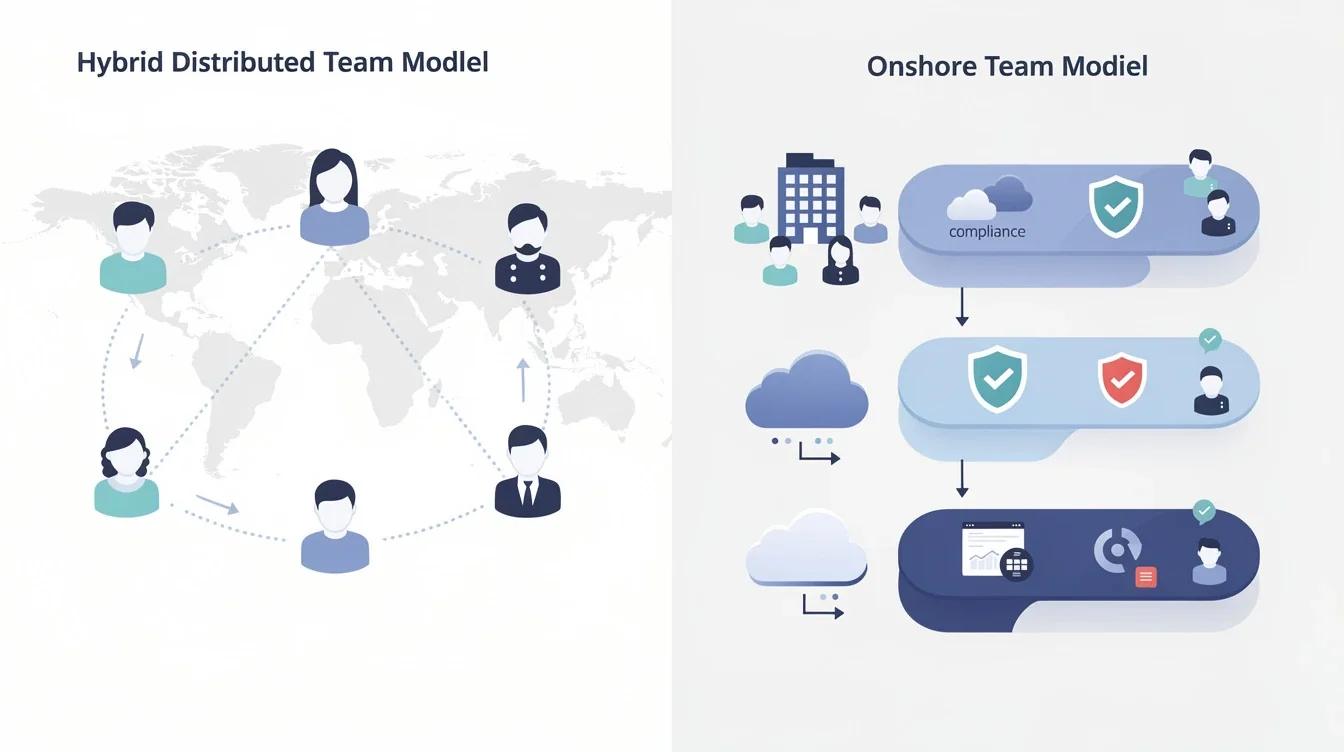
When it comes to regulated SaaS, compliance isn’t just about ticking boxes—it’s about building trust with customers, partners, and regulators. Both onshore and hybrid teams can deliver compliant solutions, but the path looks different.
Onshore teams make compliance straightforward. You’re operating within a single legal and regulatory context. It’s easier to enforce security policies, conduct background checks, and maintain audit trails. This is especially important for frameworks like HIPAA, SOC 2, or PCI DSS, where even a small misstep can lead to hefty fines or reputational damage.
Hybrid teams, meanwhile, require a more nuanced approach. You must ensure that overseas team members don’t inadvertently introduce compliance risks. That might mean restricting access to production data, using anonymized test sets, or setting up secure development environments. It also means constant vigilance—regular audits, compliance training, and up-to-date documentation are a must.
The right partner makes all the difference. Work with overseas teams who have experience in regulated industries and can demonstrate a track record of compliance. Invest in the right tools for secure code repositories, encrypted communication, and automated monitoring.
Pro tip: Use role-based access controls to limit what overseas team members can see and do—protecting sensitive data while maximizing productivity.
Cost and Scalability Considerations
Let’s talk dollars and sense. Every SaaS founder knows that runway is precious. Onshore teams, while offering tight control, come with a much higher price tag. Salaries, benefits, and overhead for US-based engineers can quickly eat into your budget—especially if you’re building for the long haul.
Hybrid models shine here. By leveraging overseas talent for execution-heavy tasks, you can stretch your budget 2-3x further, hiring more hands or extending your development runway without compromising your core compliance functions. This flexibility is invaluable for startups or SMBs looking to scale quickly, test new features, or pivot as market needs change.
But cost savings don’t mean you can ignore management overhead. Hybrid teams demand more from your project managers and tech leads. You’ll need to invest in agile workflows, clear communication channels, and ongoing team-building to keep everyone moving in the same direction.
Pro tip: Track both direct and indirect costs—factor in management time, onboarding, and process improvements when comparing team models.
Collaboration, Culture, and Communication
People build software, not robots. Team chemistry and communication are the engine behind every successful SaaS launch, especially in regulated environments.
Onshore teams have a natural advantage—shared language, culture, and work habits make collaboration seamless. Brainstorming sessions, impromptu standups, and whiteboard sessions happen organically in the office or over Zoom. Decision-making is often faster, and misunderstandings are rare.
Hybrid teams require intention. You’ll need to be proactive about time zones, language differences, and cultural expectations. This doesn’t mean hybrid teams can’t be high-performing—in fact, many of the world’s best SaaS products were built by distributed teams. But success hinges on documentation, asynchronous workflows, and scheduled check-ins.
Foster a sense of unity by celebrating wins, sharing feedback, and making sure everyone has a voice—regardless of location. Invest in onboarding, mentorship, and regular team retrospectives. The goal: create a single team identity, not a “them vs. us” dynamic.
Pro tip: Rotate project leads or host periodic onshore-offshore workshops to build trust and cross-pollinate ideas.
Making the Right Choice for Your SaaS
So which team model should you choose? If uncompromising compliance and close collaboration are your top priorities—and your budget can support it—an onshore team may be your best bet. For many regulated SaaS businesses, though, a well-structured hybrid model offers the best blend of cost savings, scalability, and control.
At Digital Minds, we recommend starting by mapping your compliance requirements, then designing your team structure accordingly. Keep sensitive work onshore, but don’t be afraid to leverage overseas expertise for everything else. With the right processes, tools, and partners in place, you can scale faster, deliver more value, and still meet the strictest regulatory standards.
Pro tip: Pilot your hybrid model with a small, well-defined project—iterate, learn, and scale up as your processes mature.
Conclusion
Building regulated SaaS is a high-stakes game. The right team model can make the difference between compliant, scalable growth and expensive setbacks. While onshore teams offer simplicity and peace of mind, hybrid models unlock global talent and cost efficiencies—if you invest in the right structure and processes. At Digital Minds, we’ve seen hybrid models fuel rapid innovation without sacrificing security or compliance. The key is thoughtful planning, clear roles, and a relentless focus on quality—no matter where your team sits. Choose wisely, build boldly, and let your SaaS thrive.



1 Comment
[…] providers like AWS, Azure, and Google Cloud offer a variety of pricing models beyond on-demand instances. For workloads with predictable usage—like your core application or […]