



Every dollar counts when you're building a digital product. Whether you're a startup founder racing to MVP or an enterprise IT lead balancing innovation with budget, the pressure to deliver scalable, high-quality solutions—without breaking the bank—is relentless. At Digital Minds, we've seen first-hand how the right team structure can make or break your timeline and bottom line. That's where hybrid development teams step in, blending US-based leadership with global technical talent to unlock serious cost savings and flexibility.
In this case study, we'll walk through a real-world scenario where a hybrid team approach helped one of our clients, a fast-growing SaaS company, slash development costs, accelerate their launch, and set the stage for sustainable growth. We'll break down the numbers, the lessons learned, and the practical steps you can take to replicate their success.
The Client: SaaS Startup Facing Scaling Pressures

Our client, a US-based SaaS startup in the HR tech space, had just closed a seed round. Their product vision was ambitious: a cloud platform to automate onboarding, payroll, and compliance for small businesses. But with only six months to deliver an MVP, every decision—from tech stack to team composition—mattered.
Early estimates from local dev shops and agencies sent sticker shock through the founders. Quotes ranged from $300,000 to $500,000 for a basic MVP, with timelines that would eat up their runway. They needed a smarter, leaner way to build.
Pro tip: Before locking into a team model, map your must-have features and honest budget constraints. Hybrid teams shine when speed and cost control are essential.
Choosing the Hybrid Team Model
Our consulting process began with a deep dive into the client’s goals, tech requirements, and internal capabilities. The founders had strong domain expertise but limited technical leadership. We recommended a hybrid development model—a blend of US-based project management and product strategy, paired with a reliable overseas engineering squad.
Here's what this looked like in practice:
- US-based product manager and UX designer led discovery, sprint planning, and client communication.
- Offshore developers (Eastern Europe and Latin America) handled day-to-day coding, QA, and DevOps, collaborating in real time via agile ceremonies.
- Regular check-ins and code reviews ensured alignment with US standards and business goals.
For the client, this approach meant they could access top-tier engineering talent at 40-60% lower rates than hiring an all-local team, without sacrificing control or quality.
Pro tip: Invest in robust onboarding and clear documentation from day one. Clear expectations and process alignment are critical when your team spans time zones.
Numbers That Matter: Cost Savings Breakdown
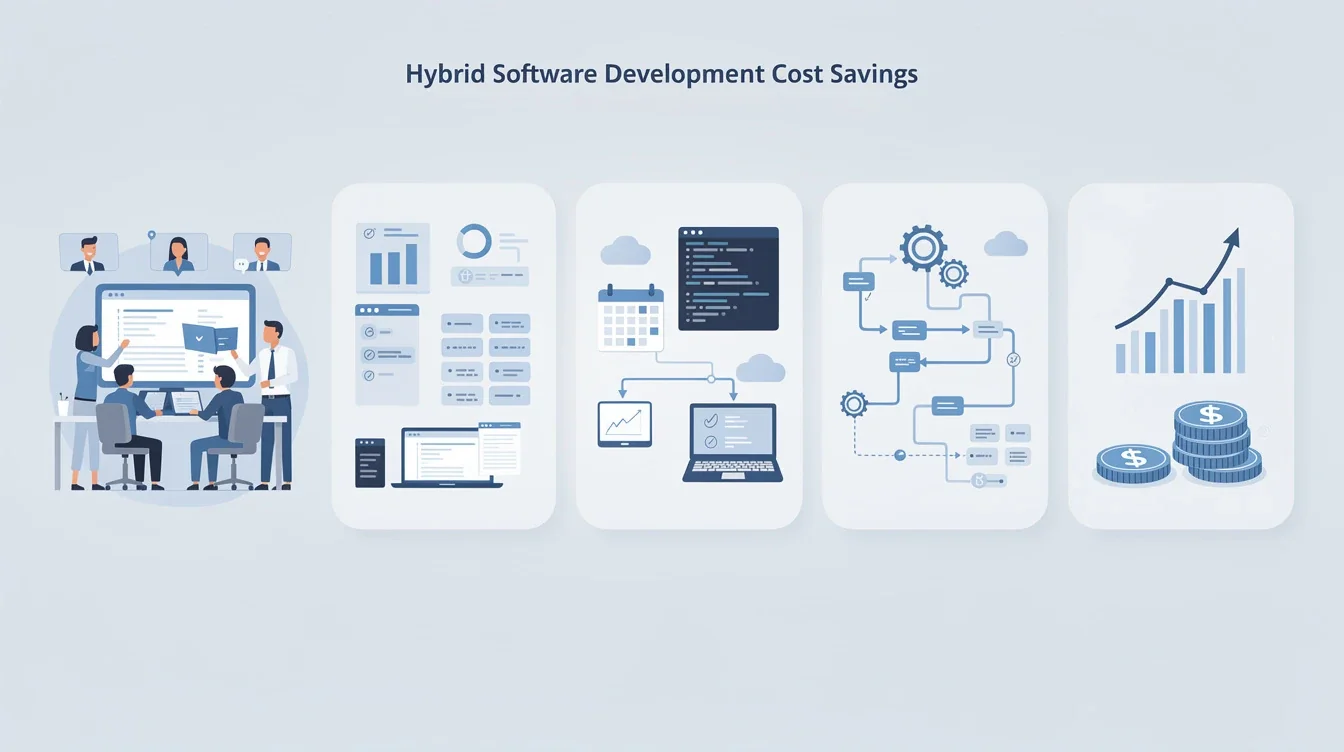
Let’s talk numbers. The original US-only team estimates would have consumed most of the client’s funding, leaving little for marketing or customer acquisition post-launch. By shifting to a hybrid model, here’s how the costs broke down:
- US-based PM & UX: $50,000 (part-time over 6 months)
- Overseas development team: $80,000 (including three senior engineers, one QA, and DevOps support)
- Miscellaneous (tools, collaboration software): $5,000
Total: $135,000 for a fully functional MVP—less than half the cost of the lowest all-local quote.
The savings didn’t just stop at payroll. With distributed teams working across time zones, the project benefited from near-continuous progress, shaving weeks off the timeline. That meant faster user feedback, earlier pivots, and a quicker path to revenue.
Pro tip: Always factor in onboarding and coordination costs when planning a hybrid team. The initial investment pays off in flexibility and long-term savings.
Quality, Communication, and Risk Management
One common concern with hybrid or remote teams is the perceived risk: Will quality slip? Will communication break down? Our client faced these questions head-on.
We established clear sprint cycles, daily standups (timed for overlap between US and overseas hours), and robust documentation standards. The US-based PM acted as both a translator of business needs and a gatekeeper for quality, ensuring every feature met the company’s standards before shipping.
Automated testing and peer code reviews kept bugs to a minimum. When challenges emerged—like timezone gaps or shifting requirements—the hybrid team structure let us adapt quickly, pulling in additional resources or shifting priorities without bureaucratic delays.
Pro tip: Use collaboration tools that create transparency, like shared Kanban boards and real-time messaging. Visibility builds trust, especially across continents.
Long-Term Scalability and Flexibility
Cost savings are great, but what happens when your product takes off and you need to scale? The hybrid model proved invaluable here, too.
As customer demand grew, the client could easily ramp up their overseas team, adding new developers and QA specialists without the overhead of local hiring or office space. The US-based leadership ensured that scaling didn’t dilute the product vision or team culture.
Perhaps most importantly, the company wasn’t locked into a single staffing model. As their internal technical capacity grew, they gradually shifted some roles in-house—while continuing to leverage overseas resources for specialized tasks or peak workloads.
Pro tip: Build your hybrid team with scalability in mind. Document workflows and create a culture of continuous improvement to make onboarding new members seamless.
Lessons Learned and Key Takeaways
This case study isn’t a unicorn story—it’s a repeatable playbook for digital product teams looking to maximize value. Here’s what stood out:
- Hybrid teams dramatically reduce costs without sacrificing quality when managed well.
- US-based leadership is key to bridging business goals and technical execution.
- Clear process, communication, and documentation are non-negotiable.
- Flexibility in team composition supports both rapid scaling and long-term sustainability.
Perhaps the biggest lesson? Success isn’t just about cheap labor or offshoring tasks. It’s about building a culture of trust, accountability, and clarity—no matter where your team members sit.
Pro tip: Regular retrospectives (even short ones) keep your team aligned, surface issues early, and reinforce a culture of improvement.
Conclusion
Hybrid development teams are more than a budget hack—they’re a proven strategy for companies who want to move fast, stay lean, and deliver quality digital products without compromise. For our SaaS client, the approach unlocked dramatic cost savings, faster time-to-market, and the ability to scale with confidence.
At Digital Minds, we’re passionate about helping clients find the right blend of local expertise and global talent to achieve their business goals. If you’re weighing your options, remember: the right team structure can be the difference between launching on time and missing your market. Hybrid models, when done right, aren’t just cheaper—they’re smarter.
Ready to rethink how you build? The Digital Minds team is here to help you design, develop, and scale—no matter where you are on your journey.



1 Comment
[…] thin. For ambitious SMBs, building digital products or expanding services can feel daunting. Enter the managed offshore development center (ODC): a strategic solution that helps SMBs access global talent, accelerate product […]