
In today's globalized tech landscape, leveraging offshore software teams has become a strategic advantage for startups, SMBs, and enterprises alike. The potential for cost savings, access to specialized talent, and rapid scaling is immense. But with these opportunities come critical challenges—especially when it comes to compliance risk management. At Digital Minds, we've seen firsthand how regulatory missteps can stall product launches, threaten intellectual property, and cause costly delays. The good news? With the right approach, you can confidently manage compliance risks and harness the true potential of your offshore teams.
Understanding Compliance Risks Offshore

When you work with offshore software teams, you're not just juggling time zones and communication styles—you're also navigating a maze of global regulations. Compliance risks range from data privacy laws like GDPR and CCPA to industry-specific standards such as HIPAA for healthcare or PCI-DSS for payments. Different countries—and sometimes even regions within countries—impose their own rules about how data is stored, processed, and shared.
It's essential to recognize that compliance isn't a one-time checklist. Instead, it's a dynamic process that evolves as your product, team, and the regulatory environment change. For US-based companies, the challenge grows when teams in India, Eastern Europe, or Latin America handle sensitive user data, source code, or financial transactions. Any oversight can lead to hefty fines, reputational damage, and even loss of market access.
Pro tip: Map out all jurisdictions your data touches—including where your users are located, where your servers reside, and where your team members work. This gives you a clear view of which regulations apply.
Building a Robust Compliance Culture
Compliance risk management starts with culture, not just documentation. If your offshore teams see compliance as a box-ticking exercise, they're more likely to overlook details or treat policies as optional. Instead, foster a culture where compliance is everyone's responsibility, from engineers to project managers.
This begins with onboarding. Make sure every offshore team member is introduced to your company's compliance standards, understands why they're important, and knows where to find support. Regular training is non-negotiable, as regulations and best practices are always evolving. Encourage open communication—team members should feel comfortable flagging potential issues or asking questions about compliance, without fear of blame.
At Digital Minds, we've learned that when offshore teams feel included and invested in compliance, they're far more likely to surface risks early and suggest process improvements.
Pro tip: Appoint a compliance champion within your offshore team. This person acts as a bridge between your US-based leadership and the overseas group, reinforcing standards and escalating concerns quickly.
Practical Steps for Managing Compliance Offshore
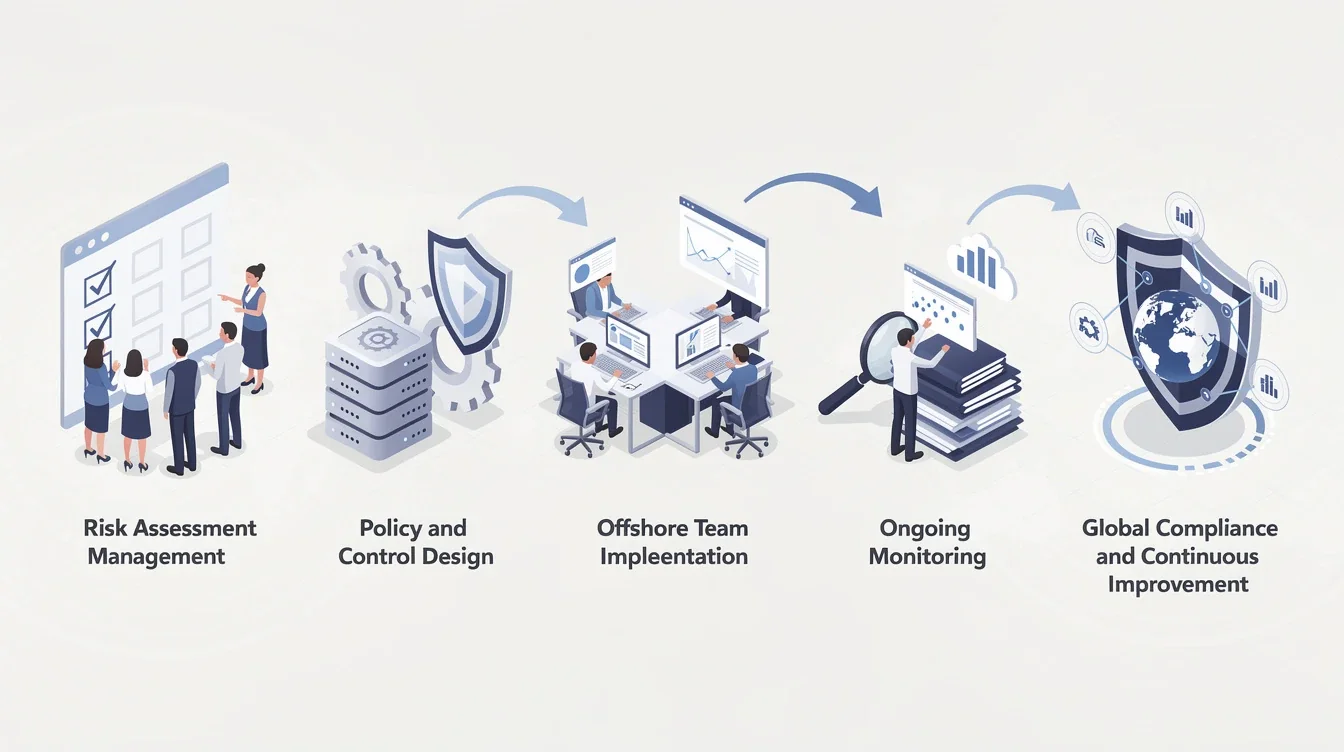
Turning compliance theory into practice requires a blend of technology, process, and oversight. Start by clearly documenting your compliance requirements, tailored to your industry and operational footprint. Share these documents with your offshore partners, and revisit them frequently as laws and business needs change.
Next, embed compliance checks into your development lifecycle. This means regular audits of code, data handling practices, and access controls—not just at launch, but throughout the product's evolution. Use version control systems, secure communication tools, and role-based permissions to minimize risk. For sensitive data, encryption (both at rest and in transit) should be non-negotiable.
Vendor management is another critical area. Your offshore partners may use their own subcontractors or cloud services, and each link in the chain introduces potential vulnerabilities. Perform due diligence before onboarding new partners, and require clear documentation of their compliance measures.
Pro tip: Leverage automation where possible. Automated compliance monitoring tools can flag issues in real-time, helping you catch problems before they escalate.
Navigating Data Privacy and Security
Few compliance challenges are as high-stakes as data privacy and security. With regulations like GDPR and CCPA setting strict standards—and imposing steep penalties for violations—it's imperative to treat user data with the utmost care. When your software development involves offshore teams, you face additional complexities around who can access sensitive data, how it's transferred, and where it's stored.
Start by embracing the principle of least privilege: only those who absolutely need access to personal or confidential data should have it. Data minimization is equally important—collect and store only what's essential for your product or service. Implement secure methods for transferring data between locations, and avoid sending raw datasets unless absolutely necessary.
Regularly review your data processing activities, and keep detailed records to demonstrate compliance if regulators come knocking. In the event of a data breach, having a clear incident response plan that includes your offshore team is critical for both legal compliance and customer trust.
Pro tip: Conduct mock data breach drills with your offshore teams. Practicing your response ensures everyone knows their role if the worst happens.
Overcoming Communication Barriers
Effective compliance management depends on clear, consistent communication—something that can be tricky with distributed teams across different cultures and time zones. Misunderstandings or ambiguities can easily lead to non-compliance, especially if policies aren't translated into actionable steps for your offshore partners.
To bridge the gap, invest in documentation that's easy to understand and up to date. Avoid legal jargon where possible, and provide concrete examples relevant to your team's daily work. Use collaboration tools that allow for asynchronous discussions, so questions and clarifications aren't lost in the shuffle. Regular video check-ins—especially at key project milestones—help ensure everyone is aligned and can surface any concerns.
It's also wise to schedule periodic reviews where you revisit compliance processes with your offshore team. This keeps everyone on the same page and signals that compliance isn't a "set it and forget it" topic.
Pro tip: Create a living FAQ or compliance playbook that evolves with your processes. Make it easily accessible to all team members, regardless of location.
Cost-Effective Compliance Strategies
A common misconception is that robust compliance risk management means ballooning budgets and endless red tape. In reality, proactive compliance is often more cost-effective than dealing with the fallout from a breach or regulatory violation. For Digital Minds clients, we've found that investing up front in training, process, and automation pays dividends in reduced risk and faster go-to-market timelines.
Prioritize your efforts based on risk. Focus first on areas with the greatest potential impact—typically data privacy, access controls, and vendor management. Use open-source compliance tools when appropriate, and tap into your offshore team's expertise—they may have valuable experience with local regulations and cost-effective solutions.
Remember, compliance is an investment in your company's reputation and long-term growth. Clients and partners increasingly demand proof that you can be trusted with their data and business. Demonstrating strong compliance practices can be a differentiator in competitive markets.
Pro tip: Build compliance into your MVP launch strategy. Addressing key risks early keeps you nimble and avoids costly rework before scaling.
Conclusion
Offshore software teams are a powerful lever for innovation and growth, but compliance risk management can't be an afterthought. By understanding the unique risks, fostering a proactive compliance culture, embedding robust processes, and communicating clearly across borders, you can turn compliance from a burden into a competitive advantage.
At Digital Minds, we've helped clients launch and scale software products with reliable overseas teams—without sacrificing regulatory peace of mind. With the right approach, you can unlock offshore potential and build products that are not just innovative, but also secure and compliant from day one.