



If you’re in the fast-paced world of building digital products, you’ve probably heard how important it is to launch a Minimum Viable Product (MVP). But here’s what too many founders and product teams overlook: the true power of an MVP isn’t just getting to market quickly—it’s about learning from real users as soon as possible. At Digital Minds, we’ve seen firsthand how early user analytics can supercharge your MVP, helping you make smarter decisions, avoid costly missteps, and ultimately save a ton of money as you scale. Let’s break down why early analytics are your MVP’s best friend, and how you can leverage them to maximize every dollar you spend.
Why Build an MVP in the First Place?

Before we dig into analytics, let’s revisit why the MVP approach is so popular. Building a full-featured product takes time and money—often much more than you expect. The MVP strategy is all about stripping your idea down to its core essentials, launching quickly, and then iterating based on what real users actually do, not just what you think they’ll do.
When you build an MVP, you:
- Cut down on development time and initial investment
- Get your product in front of users faster
- Minimize the risk of building features nobody wants
But here’s the catch—launching an MVP is just the first step. What you do after launch matters even more. That’s where user analytics come in.
Pro tip: Focus on the smallest set of features that solves a real problem. The less you build upfront, the more you can invest in learning and iterating.
The Case for Early User Analytics
So, you’ve launched your MVP. Now what? The biggest mistake we see is waiting too long to measure how users actually interact with your product. Early user analytics aren’t just about counting signups or page views—they’re about gathering actionable insights that can save you thousands (or millions) down the line.
Early analytics help you answer questions like:
- Which features are users actually using?
- Where are they getting stuck or dropping off?
- Is your onboarding process effective?
- What’s driving engagement, and what’s just noise?
By answering these questions early, you can validate (or invalidate) your assumptions before pouring more resources into development. This means you avoid investing in features users don’t care about, and focus your efforts where they’ll have the biggest impact.
Pro tip: Set up simple analytics tools (think Google Analytics, Mixpanel, or Amplitude) from day one. The earlier you start tracking, the more historical data you’ll have to inform your product roadmap.
Key Metrics to Watch (and What They Tell You)
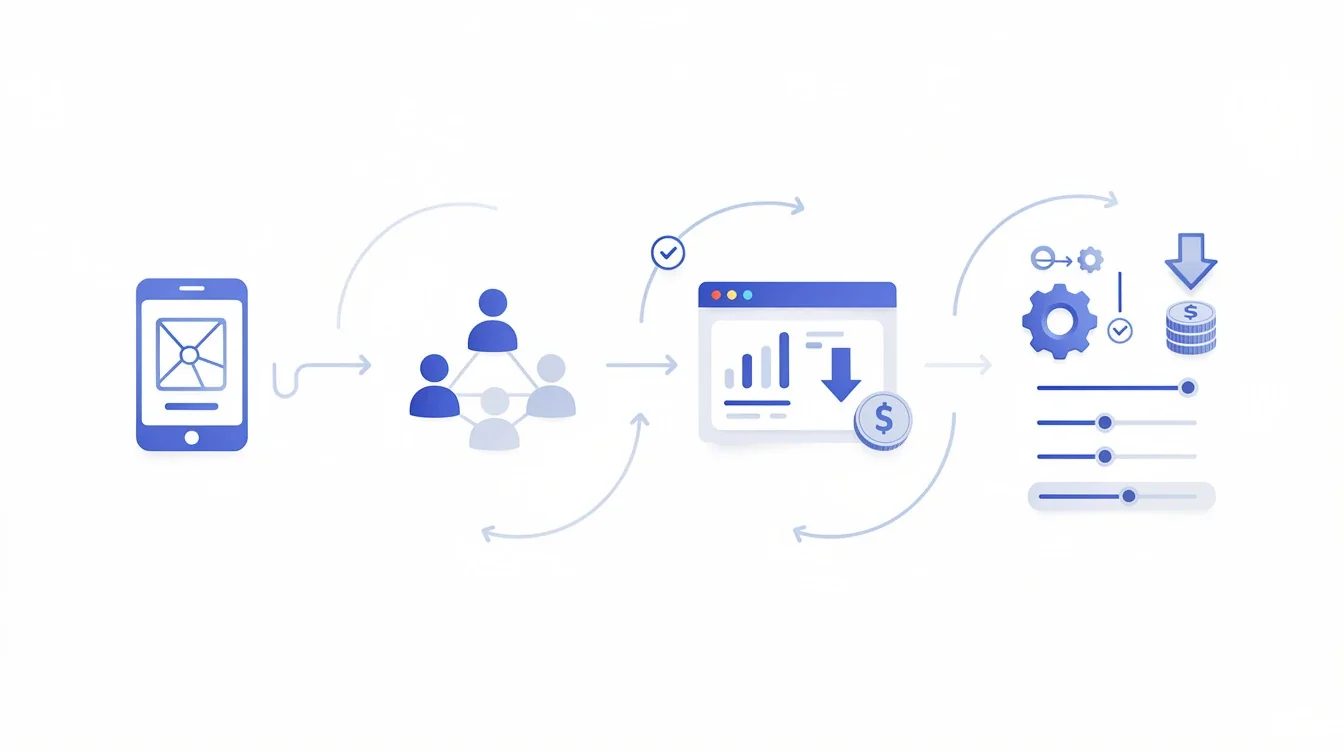
Not all metrics are created equal. For MVPs, it’s easy to get distracted by vanity metrics—big numbers that look impressive but don’t actually tell you if your product is working. Instead, zero in on metrics that reflect real user value and potential growth.
Here are a few MVP analytics we recommend tracking right out of the gate:
- Activation Rate: The percentage of users who complete the core action your product is built around. If this is low, your value proposition or onboarding might need work.
- Retention Rate: How many users come back after their first visit? Poor retention often signals a lack of product-market fit.
- Conversion Rate: Are users taking the next step, like subscribing, upgrading, or making a payment? This is crucial for validating your business model.
- Feature Usage: Which features are actually being used? You might be surprised what’s popular—and what’s ignored.
- User Feedback: Qualitative data (like surveys or interviews) rounds out the numbers and helps you understand the “why” behind user behavior.
Tracking these metrics from day one gives you a roadmap for improvement, helping you make data-driven decisions that keep your budget focused on what matters.
Pro tip: Don’t try to track everything. Pick 3-5 core metrics that align with your MVP’s goals, and review them regularly with your team.
Real-World Cost Savings from Early Analytics
So, how do early analytics translate to actual cost savings? Let’s look at a few scenarios we’ve seen at Digital Minds:
Avoiding Unneeded Features: One startup we worked with was convinced a social sharing feature would be a game-changer. Early analytics showed almost nobody used it. Cutting this feature from their roadmap saved weeks of development time and thousands in costs.
Improving Onboarding: Another client saw a huge drop-off after signup. By analyzing user flows, we spotted a confusing onboarding step. A quick redesign boosted activation rates by 30%, turning more signups into active users—without additional marketing spend.
Pivoting Before It’s Too Late: We’ve helped founders realize, early on, that their core product wasn’t resonating. Thanks to early analytics, they were able to pivot quickly, reallocate their budget, and find a more promising direction before burning through their runway.
Early analytics aren’t just about optimizing—sometimes they’re about stopping the bleeding before it starts.
Pro tip: Build a habit of weekly analytics reviews. Short feedback loops mean you catch issues (and opportunities) before they snowball into expensive problems.
How to Set Up Lean Analytics for MVPs
You don’t need a massive data science team to get started with MVP analytics. In fact, simplicity is your friend. Here’s how to set up a lean analytics process:
- Define Your Goals: What are the top 1-2 questions you need to answer to validate your MVP? Start there.
- Pick the Right Tools: Choose analytics platforms that are easy to implement and don’t require heavy engineering resources. Most can be set up in a day.
- Instrument Key Events: Work with your developers to track the actions that matter most (signups, feature use, conversions).
- Automate Reporting: Set up dashboards or email reports so your team can see key metrics at a glance.
- Loop in Your Team: Make analytics part of your regular product discussions, not an afterthought.
At Digital Minds, we often recommend starting with just a few key events and iterating as you learn more about your users. The goal isn’t to track everything—it’s to focus on the metrics that drive decisions.
Pro tip: Document your analytics setup and assumptions. This makes it easier to onboard new team members and keep everyone focused on what matters.
The Growth Payoff: From MVP to Scalable Success
The benefits of early analytics don’t stop at cost savings—they set the stage for growth. When you know exactly how users are engaging with your MVP, you can:
- Double down on features that drive retention and revenue
- Fine-tune your marketing messages based on real user behavior
- Make a stronger case to investors with hard data, not just gut feel
- Scale your product confidently, knowing your roadmap is anchored in reality
Early analytics turn your MVP from a shot in the dark into a data-driven experiment. And when it’s time to scale, you’ll be miles ahead of competitors who are still guessing.
Pro tip: Use your early analytics as a foundation for A/B testing. Small experiments can reveal big wins before you commit to expensive changes.
Related Articles
Conclusion
Launching an MVP isn’t just about moving fast—it’s about learning fast. By investing in early user analytics, you give your team the data they need to make smarter, more cost-effective decisions at every stage. You’ll avoid building features no one wants, fix problems before they become expensive, and set yourself up for sustainable growth. At Digital Minds, we believe early analytics are the MVP’s secret weapon for saving money and scaling smarter. Don’t just launch—learn, iterate, and grow with confidence.



1 Comment
[…] leveraging pricing models, and fostering a culture of cost awareness, you’ll not only survive the early days—you’ll […]
Your comment is awaiting moderation.
[…] MVP (frontend and backend) can set the stage for future scaling without overcomplicating early […]