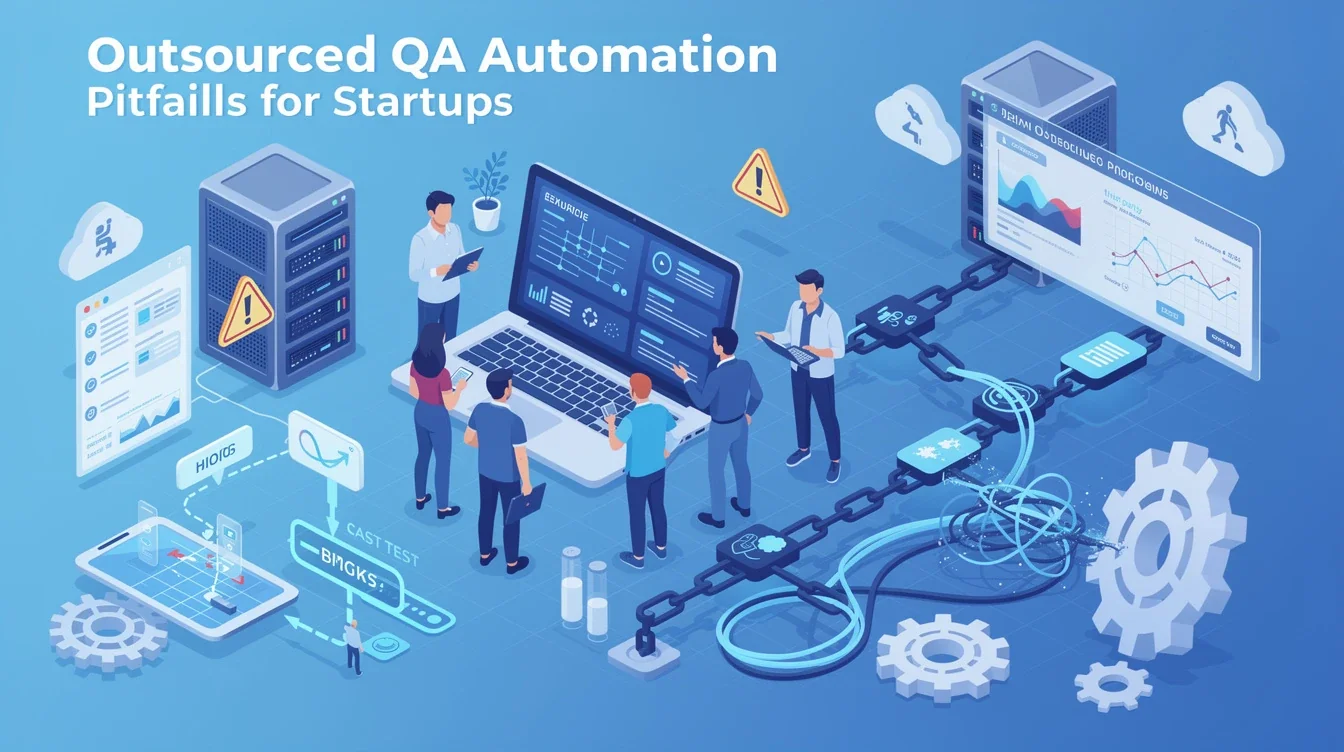
In today’s hyper-competitive tech landscape, startups have to move fast. Getting an MVP to market can feel like a sprint, and keeping costs down is always top of mind. It’s no surprise that outsourcing QA automation looks attractive: you can extend your team, tap into global talent, and keep your burn rate in check. But there’s a catch. While outsourced QA offers plenty of benefits, there are just as many pitfalls—especially for startups under pressure. Before you hand off your testing, it pays to know where things can go off the rails, and how to avoid costly mistakes that could derail your product launch.
Misaligned Expectations and Communication

One of the most common pitfalls when outsourcing QA automation is misalignment—on goals, scope, or even basic communication. Startups, by their nature, are agile and often pivot rapidly. If your overseas QA team isn’t looped in on those changes, you’ll end up with automated tests that are out of date before they’re even run. This disconnect can lead to failed test cycles, missed bugs, and ultimately, a product that doesn’t deliver for your users.
Remote teams may also operate in different time zones, which can slow down feedback loops. If you’re waiting a full day to clarify requirements or report a bug, your release schedule can quickly slip. Clear, ongoing communication is key—not just at project kickoff, but throughout your entire engagement.
Pro tip: Set up regular check-ins and use collaborative tools for real-time updates. Make sure your outsourced QA team has direct access to your developers and product owners.
One-Size-Fits-All Test Automation
It’s tempting to treat QA automation as a plug-and-play solution, but automation strategies that work for mature enterprises often won’t fit a fast-moving startup. Many outsourced teams come with their own preferred tools and frameworks, which might not align with your tech stack or business needs. If your QA partner insists on using heavyweight enterprise tools or over-engineered frameworks, you’ll end up with bloated test suites that are slow to run and hard to maintain.
Startups need lean, targeted automation that focuses on high-risk, high-value areas of the product. Over-automation wastes time and budget, while under-automation leaves you exposed to critical bugs. The key is finding the right balance—and ensuring your outsourced team understands your priorities.
Pro tip: Insist on a tailored automation plan. Prioritize test coverage based on your MVP’s core features and customer journeys, not just what’s easiest to automate.
Quality Takes a Back Seat
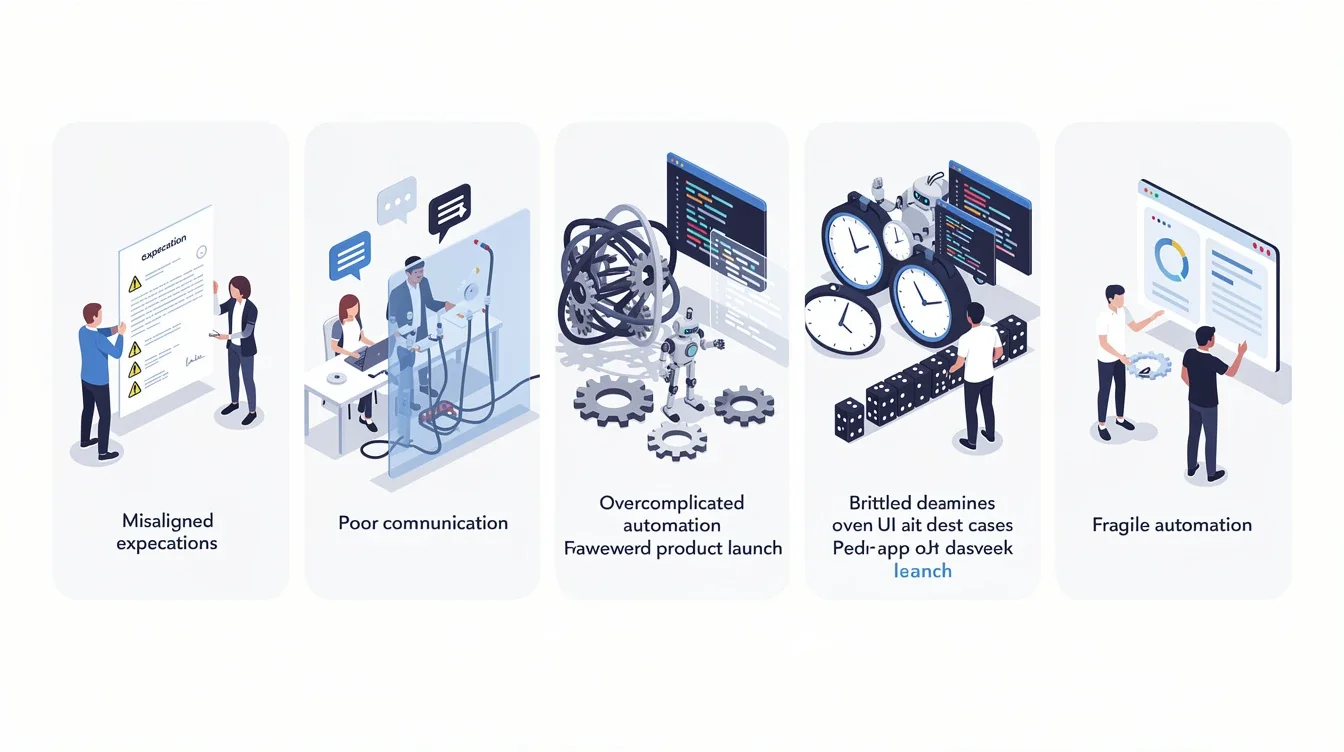
Outsourced QA teams are often measured by output—number of tests written, test cases executed, or bugs reported. But quantity doesn’t equal quality. If your automation partner is incentivized to “check boxes” rather than find real issues, critical defects can slip through the cracks. This is especially risky for startups, where one major bug can sink your launch or scare off early adopters.
You need a QA partner who understands your product’s context, not just the mechanics of test automation. They should be able to think like your users, spot edge cases, and give actionable feedback to your development team. Otherwise, you’ll end up with a false sense of security—and a product riddled with hidden issues.
Pro tip: Make quality a shared responsibility. Review test plans to gether and ask for clear justifications when skipping or prioritizing tests.
Poor Knowledge Transfer and Onboarding
Startups are constantly evolving, and so is your product. If your outsourced QA team doesn’t have a deep understanding of your business, onboarding new testers or ramping up after a pivot becomes a headache. Documentation can get out of sync, tribal knowledge is lost, and every handoff increases the risk of missed requirements or duplicated effort.
This is especially problematic if your QA provider relies on a revolving door of junior testers or frequently shifts resources between projects. Without solid onboarding processes and clear documentation, each new team member is starting from scratch—and your automation investment quickly loses value.
Pro tip: Treat your QA partner as a long-term extension of your team. Invest time in onboarding, share product roadmaps, and encourage cross-functional collaboration.
Hidden Costs and Vendor Lock-In
On the surface, outsourced QA automation looks like a cost saver. But if the engagement isn’t managed carefully, hidden costs can creep in. Proprietary frameworks, specialized tooling, or opaque billing models can lock you into a single vendor. If you need to switch providers or bring QA in-house down the road, you could face expensive migrations or rework.
Startups benefit from flexibility, so it’s crucial to avoid vendor lock-in from day one. Insist on using open-source tools where possible and require clear documentation for all automation assets. This ensures you retain control over your test suites and can adapt as your business grows.
Pro tip: Negotiate ownership of all test scripts and automation frameworks up front. Make portability and transparency a non-negotiable part of your contract.
Scaling Challenges as You Grow
What works for a handful of features or a single product line can quickly break down as your startup scales. If your outsourced QA automation isn’t designed to grow with you, you’ll run into bottlenecks—whether it’s test suites that take hours to run, or automation scripts that can’t be reused across new modules.
Scalable QA automation requires forward thinking. Your outsourced team should plan for modular test architecture, efficient reporting, and continuous integration from the outset. If they don’t, you’ll have to rebuild your automation from scratch every time your product evolves.
Pro tip: Ask your QA partner about their experience with scaling test automation. Look for examples where they’ve supported clients through rapid growth or major pivots.
Conclusion
Outsourcing QA automation can be a smart, cost-effective move for startups—if you go in with your eyes open. The right partner can help you launch faster, catch critical bugs, and scale confidently. But the wrong approach can leave you with broken processes, hidden costs, and a product that doesn’t live up to its promise. At Digital Minds, we believe in practical, growth-focused solutions that put your needs first. By staying vigilant to these pitfalls and building strong partnerships with your QA teams, you’ll set your startup up for long-term success—without sacrificing quality or agility.