Most teams chasing “cost effective offshore development teams” end up with something else entirely: a cheaper burn rate on paper and an invisible productivity tax everywhere else. Missed context, partial handoffs, zombie backlogs, quality drift, and architecture that slowly bends to the cheapest available skills. Sound familiar?
Table of Contents
- 1. Why most offshore cost models lie to you after month three
- 2. Designing cost effective offshore development teams around work topology not headcount
- 3. Advanced execution patterns that
- 4. Edge cases that quietly destroy offshore economics
Key Takeaways
| Concept | Why It Matters | Action for Experienced Leaders |
|---|---|---|
| All‑in cost models beat simple rate comparisons | Rate-only decisions usually erase savings via rework and coordination tax | Model fully-loaded cost per shippable story point over 2–3 quarters |
| Skill topology drives architecture and long‑term costs | Your offshore skill mix will subtly push your tech stack in or out of alignment | Align hiring and vendor choices to your target architecture, not the reverse |
| Execution patterns decide if offshore teams stay cost effective | Sloppy handoffs and unclear ownership destroy the benefits of lower rates |
1. Why most offshore cost models lie to you after month three
Everyone selling cost effective offshore development teams will show you a perfect-looking spreadsheet for month one. Hourly rates, projected savings, maybe even some glossy benchmarks. And then, three months in, your actual burn per outcome looks nothing like the pitch. The root problem: people compare rates, not fully loaded cost of a shippable unit of value. You already know the basics of TCO, but I’d argue most teams still underestimate three quiet multipliers: coordination overhead, decision latency, and rework due to context loss.
A more honest model starts with what you care about: cost per production-ready story point or cost per release-quality feature. You take your total offshore spend (vendor fee, managers, product, QA, cloud, tools, even your internal time spent unblocking them) and divide it by what actually hits prod and stays there without hotfixes for 30 days.
When we’ve done this with clients, I’ve repeatedly seen something unintuitive: a $65/hr offshore engineer in a tight system beats a $35/hr engineer in a messy one by 30–40% on real cost per shipped feature. That’s where cost effective offshore development teams are actually created—in the system, not the day rate.
There’s actual research backing this up: coordination and communication overheads are a major driver of distributed project failure, often outweighing raw labor cost benefits, as several studies on global software development in IEEE and ACM journals have shown. HBR has also highlighted how hidden collaboration costs can swallow supposed savings in distributed setups.
So the question isn’t “How cheap can I get the rate?” It’s “What structure and policies will keep fully-loaded cost per shipped outcome trending down over four quarters instead of spiking after the honeymoon phase?” 7 Myths About Custom Software Development
One more pet peeve here: people forget depreciation of knowledge. Every time you churn team members because “there’s always more talent in this market,” you quietly reset domain understanding. That cost doesn’t show up on invoices, but it absolutely shows up in velocity decay.
-
Model 12–18 month cost, not quarter-one savings
-
Track cost per stable story point, not per sprint output
-
Include your internal product and leadership time in offshore cost
-
Monitor attrition and ramp time as explicit financial line items
| Scenario | Headline Hourly Rate | Coordination + Rework Overhead | Effective Cost per Story Point (6 months) | Typical Failure Mode |
|---|---|---|---|---|
| Low-cost vendor, weak structure | $30 | 70–90% | $210–$230 | Spec churn, hidden rework, product drift |
| Mid-rate vendor, strong product partnership | $45 | 25–40% | $120–$150 | Occasional bottlenecks during major pivots |
| Mixed onshore/offshore, tight governance | $65 (offshore), $110 (onshore) | 15–25% | $110–$135 | Higher visible cost, but predictable outcomes |
| Pro tip: Rebuild your business case quarterly using real defect rates, cycle times, and attrition—not vendor-reported velocity. |
2. Designing cost effective offshore development teams around work topology not headcount
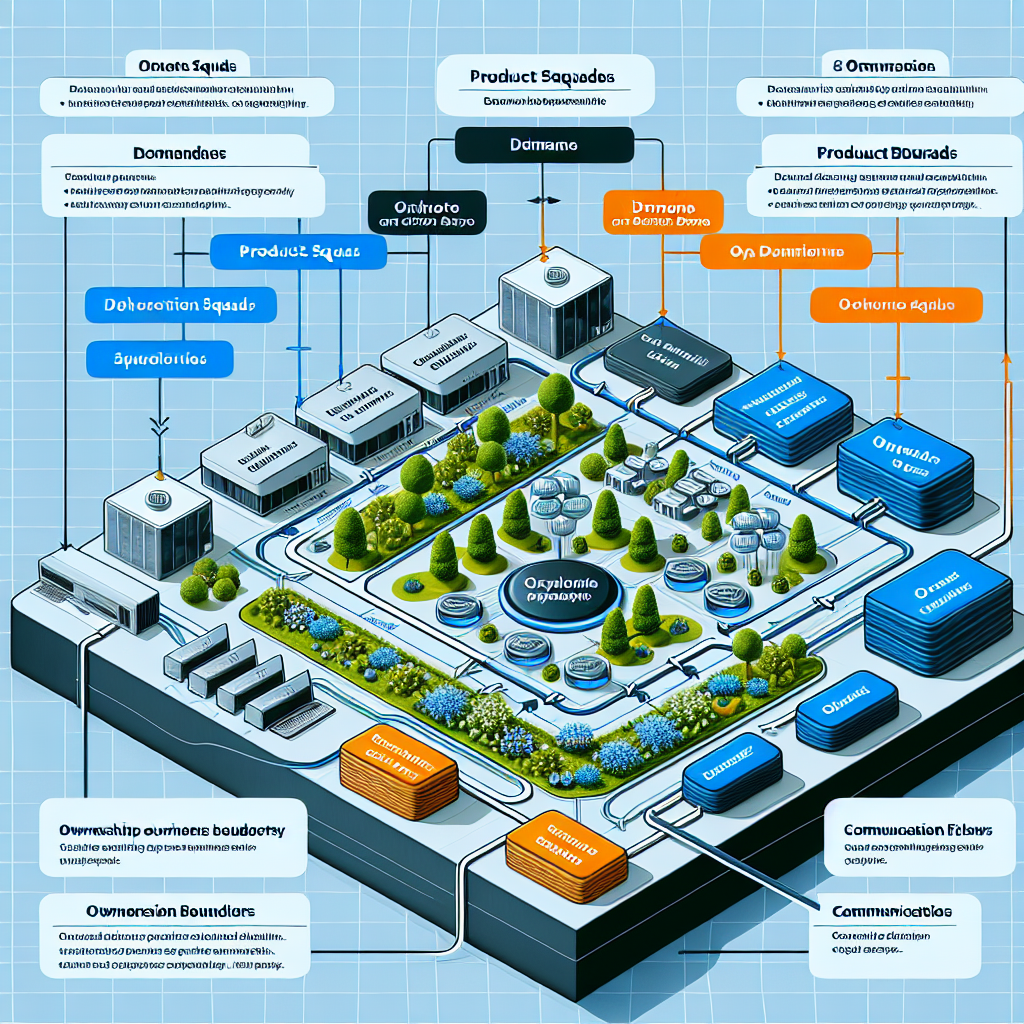
If you design your org chart around time zones and rates, your architecture will suffer. The teams building truly cost effective offshore development teams are doing the opposite: they design work topology first, then place teams into it. By topology, I mean the shape of work: which domains are stable, which change weekly, where tight product feedback is critical, where backward compatibility is hair-trigger sensitive. Once that’s mapped, you decide which slices can be owned offshore without constant onshore babysitting. My strong bias: offshore teams should own clearly bounded products or services, not miscellaneous tickets. Ticket factories kill both quality and economics. Compare that to a model where an offshore squad owns, say, “Billing and Invoicing Platform,” including its roadmap, API contracts, test suites, and SLOs. The difference in cost trajectory after 6–9 months is night and day.
A lot of leaders I talk to underestimate how strongly their vendor choice locks in architectural direction. If your partner’s bench is heavy on PHP and light on Go or Rust, guess where your new services will tend to land? Skilled people are expensive, so vendors naturally bias toward what they can staff fastest. You either counter that bias intentionally or accept it as your de-facto architecture strategy.
This is where a hybrid model shines. I’ve found that having architecture, product, and a small core engineering group onshore, with well-scoped execution pods offshore, gives you the best of both worlds. If you’re considering such a setup, the Complete Checklist for a Hybrid US guide from Digital Minds is actually pretty useful as a sanity check for things you might overlook in the rush.
Also, don’t ignore compliance and data-regulatory boundaries in your topology. For industries under HIPAA, PCI DSS, or GDPR constraints, I usually push PII-heavy data processing into tightly controlled services that are either onshore-only or managed under stricter access and logging policies. The rest—presentation, workflows, orchestration—can safely live offshore if your contracts and controls are mature enough.
-
Map domain boundaries and volatility before assigning any offshore ownership.
-
Give offshore squads product-aligned ownership, not just task queues.
-
Choose vendors whose skill mix matches your target tech roadmap, not your legacy stack.
-
Use explicit service contracts and ADRs so topology doesn’t drift when people change.
-
Align compliance-sensitive domains with jurisdictions and vendor controls deliberately.
Pro tip: If you can’t write a clean, one-page contract of ownership for an offshore squad, the domain isn’t ready for them to own.
3. Advanced execution patterns that
keep offshore velocity real not cosmetic On paper, you can get 24-hour delivery cycles by spreading work across time zones. In practice, follow-the-sun often turns into follow-the-bugs. The difference is in how you structure decision-making, feedback loops, and technical authority.
I’ve seen three patterns work consistently for cost effective offshore development teams:
First, decision latency needs hard bounds. If your offshore team is blocked on product or UX decisions every other day, your savings bleed away. One pattern that works: offshore squads get a clear decision charter—what they can decide autonomously (implementation details, refactors within a budget, minor UX tweaks) and what requires onshore approval. Anything under a certain risk/impact threshold is theirs to decide without waiting.
Second, use architectural decision records (ADRs) religiously. ADRs aren’t a silver bullet, but they’re the cheapest tool I know to keep distributed teams from fragmenting your system. When every non-trivial decision (new datastore, integration style, retry policy) is captured in a short ADR, you massively reduce clarification churn. Martin Fowler and Thoughtworks have written plenty about ADRs; their usage in distributed teams is backed up by several experience reports in the IEEE Software community.
Third, test and release ownership must sit where most changes are made. I get nervous when I see offshore devs pushing code while QA and release management stay entirely onshore. That structure almost guarantees a blame culture and slow feedback loops. For better economics, integrate QA and DevOps capabilities directly into offshore squads—ideally including infrastructure-as-code and CI/CD pipeline maintenance.
You’ll also want to agree on a handful of hard, outcome-based metrics shared across locations: lead time for changes, deployment frequency, change failure rate, and mean time to recovery (essentially the DORA metrics). If those stay healthy, you know your distributed setup is working. If not, cheaper rates are just hiding deeper issues.
One note: if your offshore partner also supports your environments, materials like the Digital Minds article on DevOps Consulting and Cloud Infrastructure Setup can be handy to align expectations around IaC, observability, and SRE practices before production incidents force the conversation.
-
Write ADRs for every non-trivial technical decision that has cross-team impact.
-
Co-locate QA, DevOps, and backend/frontend within each offshore product squad.
-
Define a decision charter: what offshore decides vs. what escalates.
-
Use DORA metrics as shared, non-negotiable indicators of health.
-
Run monthly “incident autopsies” across onshore/offshore with action items and owners.
Pro tip: Record short 5–10 minute Loom or Teams videos to explain tricky features; they cut clarification chats by half in my experience.
4. Edge cases that quietly destroy offshore economics
if you ignore them Everyone talks about talent quality and time zones. The issues that really wreck cost effective offshore development teams are sneakier. They usually sit in the grey areas between process, legal, and human behavior. One nasty edge case is partial product ownership during big pivots. If your US leadership wants to pivot the roadmap hard while your offshore team is mid-implementation, you can easily burn 4–6 weeks of effort with nothing to show. The fix isn’t “more documentation”; it’s shorter planning horizons and explicit pivot protocols: how to stop work, what gets written off, how budget is handled so vendors don’t hide sunk costs in future sprints. Another often-ignored risk: IP and open-source usage. Most experienced teams have policies, but they’re not always enforced consistently offshore. I’ve personally seen offshore teams pull in GPL-licensed components into proprietary services because “it was the easiest working code on GitHub.” Cleaning that up later is painful and expensive. A simple approved OSS list and automated license scanning in CI (e.g., using FOSSA, Snyk, or OWASP Dependency-Check) is far cheaper than retroactive remediation. The Linux Foundation and OSI both have good materials on licensing pitfalls if you need to brief your partners properly. Legacy modernization is another trap. Companies often throw legacy work offshore assuming it’s “just maintenance” and not core IP. What happens in reality: deep coupling, fragile deployment processes, and tribal knowledge get shipped to a team with zero historical context. Without strong constraints, you end up with even more tangled systems that are harder to unwind later. If you’re facing that scenario, I’d strongly suggest treating it as a structured modernization initiative, not just a cost-saving move. A resource like Legacy Application Modernization Services: What from Digital Minds lays out a sane way to handle this—strangler patterns, anti-corruption layers, and carving off modules cleanly instead of rewriting everything or patching forever. There’s also the security and compliance angle. Offshore locations can absolutely meet high standards, but you need contracts, audits, and technical controls that actually match your risk profile. Simple example: who holds SSH keys, who can see production data, and how is that access logged? A surprising number of teams still share credentials over chat. That’s how you turn a minor incident into a regulatory nightmare. Oh, and one more subtle issue: incentive structures. If your vendor is paid purely on hours, you’ll get hours. If they’re penalized for incidents but not rewarded for better reliability, you’ll get risk-averse teams who slow everything down. Hybrid commercial models (fixed for stable modules, time-and-materials with performance bonuses for new builds) take more negotiation but usually produce healthier long-term economics.