
Launching a SaaS MVP (Minimum Viable Product) is as much an art as it is a science. At Digital Minds, we’ve helped startups and established companies alike navigate the unpredictable waters of SaaS launches, and one truth stands out: understanding seasonal market trends can make or break your MVP’s early traction. If you’re building or scaling a SaaS product, it’s not enough to get the tech right—you need to think about when and how your product hits the market. Here’s how seasonal dynamics shape SaaS MVP outcomes, and how you can use these patterns to your advantage.
Why Seasonality Matters for SaaS MVPs

Most founders focus on features, pricing, and go-to-market strategies when planning their MVP. But many overlook the impact of seasonality—the predictable ebb and flow of customer behavior throughout the year. Unlike consumer goods, SaaS products aren’t always tied to holidays or weather, but the business cycles of your target audience have a huge influence on demand.
For example, B2B SaaS products often see spikes around Q1 and Q3, when companies are budgeting or launching new initiatives. On the other hand, summer and late December can bring decision-making lulls as stakeholders are out of office. Ignoring these natural rhythms can lead to lackluster launches, missed sales targets, and wasted marketing spend.
Pro tip: Map out your ideal customer’s annual calendar. Identify when they’re most likely to evaluate new tools, and time your MVP launch to coincide with these windows for maximum impact.
The Role of Fiscal Calendars and Budget Cycles
One of the most critical—and often overlooked—seasonal factors is the fiscal calendar. Many businesses plan their software budgets at specific times of year, often aligning with the start of their fiscal year or quarterly reviews. For SaaS MVPs, this means there are windows when prospects are more receptive to evaluating new solutions.
If you launch your MVP just after your target market has finalized budgets, you may face months of stalled deals or requests to “circle back next quarter.” Conversely, timing your launch when buyers are actively planning their tech stack can accelerate your sales cycle and increase your chances of early adoption.
It’s not just about the initial sale, either. Many SaaS contracts renew annually, so understanding when your competitors’ contracts are up for renewal can help you time your outreach and marketing campaigns for maximum impact.
Pro tip: Talk to potential customers about their buying cycles. Use this intelligence to plan product demos, pilots, or special offers that align with their decision-making process.
Industry-Specific Seasonality
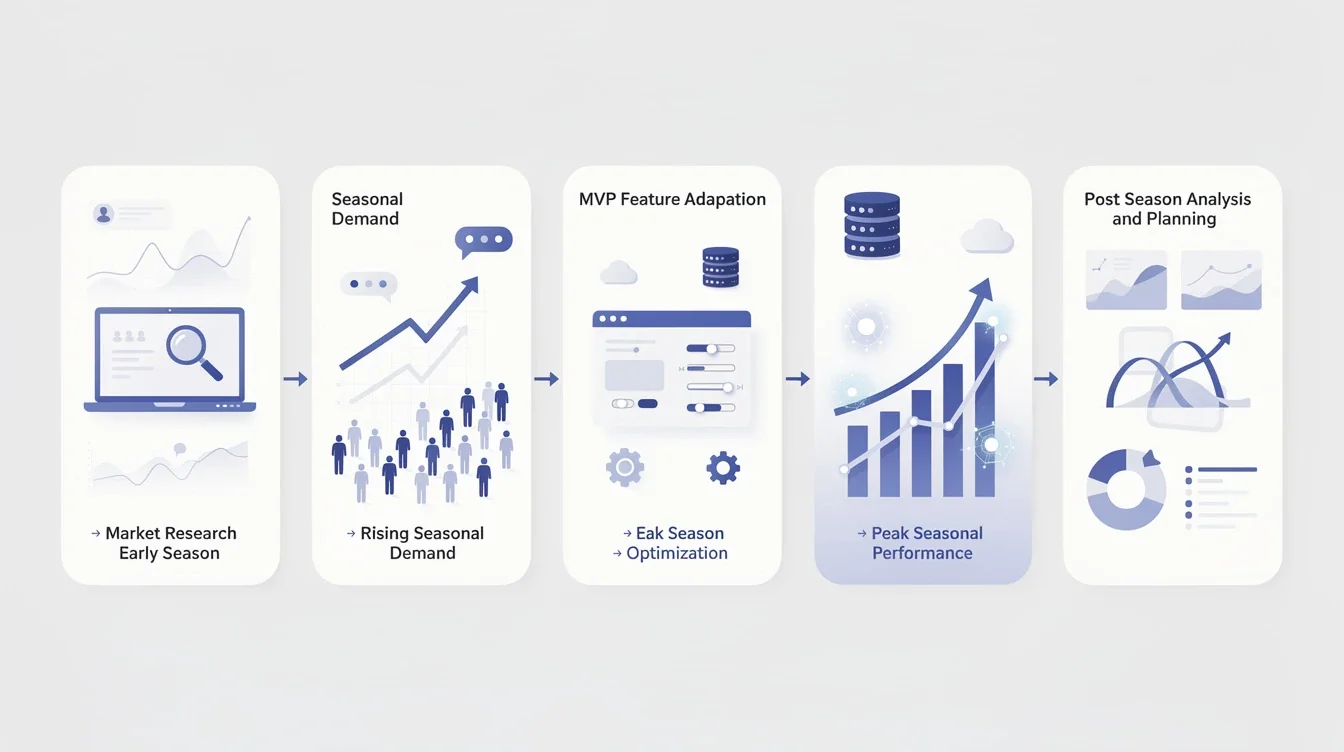
Not all SaaS markets are created equal—seasonal trends can vary dramatically by industry. For example, education-focused SaaS products often see peak interest in the months leading up to the new school year, while retail SaaS platforms ramp up before the holiday shopping season.
If your MVP serves a sector with pronounced seasonal swings, you’ll need to plan your roadmap, marketing, and onboarding processes around these peaks. Missing the window can mean waiting another year for the same level of attention and urgency from buyers.
But it’s not just about timing your launch. Seasonal demand can also influence feature prioritization. For instance, if your MVP is aimed at accountants, launching with robust tax-reporting modules ahead of tax season can be a game-changer.
Pro tip: Study your industry’s seasonal peaks and valleys. Use this data to prioritize features and tailor your MVP messaging for the specific pain points your users face at different times of year.
Marketing and User Acquisition Challenges
Seasonality impacts more than just buyer readiness—it also affects the performance of your marketing channels. Paid ad costs can spike during certain seasons as competition heats up, while email open rates and social engagement may dip when your audience is out of the office or distracted by holidays.
For SaaS MVPs with limited budgets, these swings can have an outsized effect on your cost per acquisition (CPA) and overall ROI. Launching in a crowded season may mean spending more for fewer leads, while launching during a lull might not deliver enough early adopters to validate your product.
The good news? Careful planning and a data-driven approach can help you sidestep these pitfalls. Consider running pre-launch campaigns to build a waitlist, or staggering your outreach to match when your audience is most engaged.
Pro tip: Track your marketing metrics by week and month—not just overall. Look for patterns in lead flow, conversion rates, and CPA to refine your go-to-market timing and channel mix.
Planning Your Roadmap Around Seasonal Trends
A successful SaaS MVP launch isn’t just about picking the right release date. Your entire product and go-to-market roadmap should be informed by seasonal trends. Start by mapping your development sprints, pilot programs, and onboarding efforts to align with periods of high customer attention and budget availability.
You’ll also need to plan for post-launch support. If you launch during a busy season, be ready to scale your customer success efforts to handle increased demand. Conversely, launching in a quieter period can give you time to iron out bugs and collect feedback from a smaller group of early adopters.
Remember, seasonality isn’t only about external factors. Your team’s own capacity—especially if you’re working with overseas developers or distributed teams—can fluctuate with local holidays or vacation schedules. Build buffer time into your roadmap to account for these internal variables.
Pro tip: Create a “seasonality playbook” for your SaaS MVP. Document key industry dates, internal capacity constraints, and optimal launch windows. Review and update it regularly as your company grows and your market evolves.
Leveraging Seasonal Insights for Growth
The most successful SaaS companies don’t just react to seasonal trends—they anticipate and leverage them to drive growth. By understanding when your market is most receptive, you can stack the odds in your favor for a high-impact MVP launch.
But don’t stop there. Use your learnings to inform your ongoing product development, marketing, and customer success strategies. Seasonality can help you forecast demand, allocate resources, and optimize your pricing and packaging for different times of year. Over time, you’ll build a repeatable playbook that turns these natural market rhythms into a competitive advantage.
Pro tip: Treat each launch as a learning opportunity. Collect data on what worked—and what didn’t—then refine your approach for the next cycle. The better you understand your market’s seasonal dynamics, the more efficient and effective your growth strategies will become.
Conclusion
Seasonal market trends aren’t just a footnote in your SaaS MVP strategy—they’re a core lever for driving adoption, optimizing costs, and accelerating growth. At Digital Minds, we’ve seen firsthand how intentional timing, aligned with industry and customer cycles, can turn an MVP launch into a springboard for long-term success. By planning ahead, staying data-driven, and learning from each launch, you’ll be well positioned to ride the waves of seasonality—not get swept away by them. The market’s rhythms are predictable; it’s up to you to use them to your advantage.