
Ask any founder or product lead: startup life moves fast. You’re expected to build, launch, iterate, and scale without missing a beat—or blowing your budget. The secret weapon increasingly powering this breakneck pace? AI-driven automation. For cross-functional teams juggling product, marketing, sales, and support, AI isn’t just a buzzword. It’s a practical lever for efficiency, growth, and cost control. At Digital Minds, we’ve seen firsthand how the right automation stack can transform startups from scrappy to scalable, all while keeping teams focused on creativity and impact.
The Startup Challenge: Doing More with Less

Startups are built on ambition, but resources are almost always tight. Teams are lean, deadlines are aggressive, and every dollar counts. Cross-functional collaboration is the norm—product managers wear marketing hats, engineers join customer calls, and everyone pitches in where needed. But this agility comes at a cost: context-switching, manual tasks, and communication gaps can quickly sap productivity and morale.
Enter AI-powered automation. Today’s tools go beyond simple task scheduling or notifications—they handle everything from lead scoring and personalized outreach to bug triage and code review. By automating the tedious, repetitive parts of your workflows, you free up precious hours for the deep work that drives your product forward.
Pro tip: Start by mapping your team’s most common workflows, then look for bottlenecks or repeatable tasks where automation can make the biggest impact.
How AI Automation Supercharges Collaboration
Cross-functional teams thrive on clear communication and seamless handoffs. But as your startup grows, so do the risks of dropped balls and misaligned priorities. AI-powered automation acts as connective tissue, ensuring information flows smoothly across teams and tools.
For example, AI chatbots can triage inbound support tickets, assign them to the right team member, and even suggest solutions based on historical data. Product managers can automatically route feature requests from sales directly into the product backlog, complete with AI-generated summaries. Marketing teams can leverage AI to generate campaign reports, analyze engagement, and even personalize content at scale—all without manual intervention.
The result? Teams spend less time chasing information and more time adding value. Automation also reduces human error, enforces processes, and provides real-time visibility into progress, making it easier to spot issues before they snowball.
Pro tip: Don’t over-automate. Focus on automating high-volume, low-complexity tasks first, and keep a human in the loop for anything customer-facing or mission-critical.
Building an Automation-Ready Tech Stack
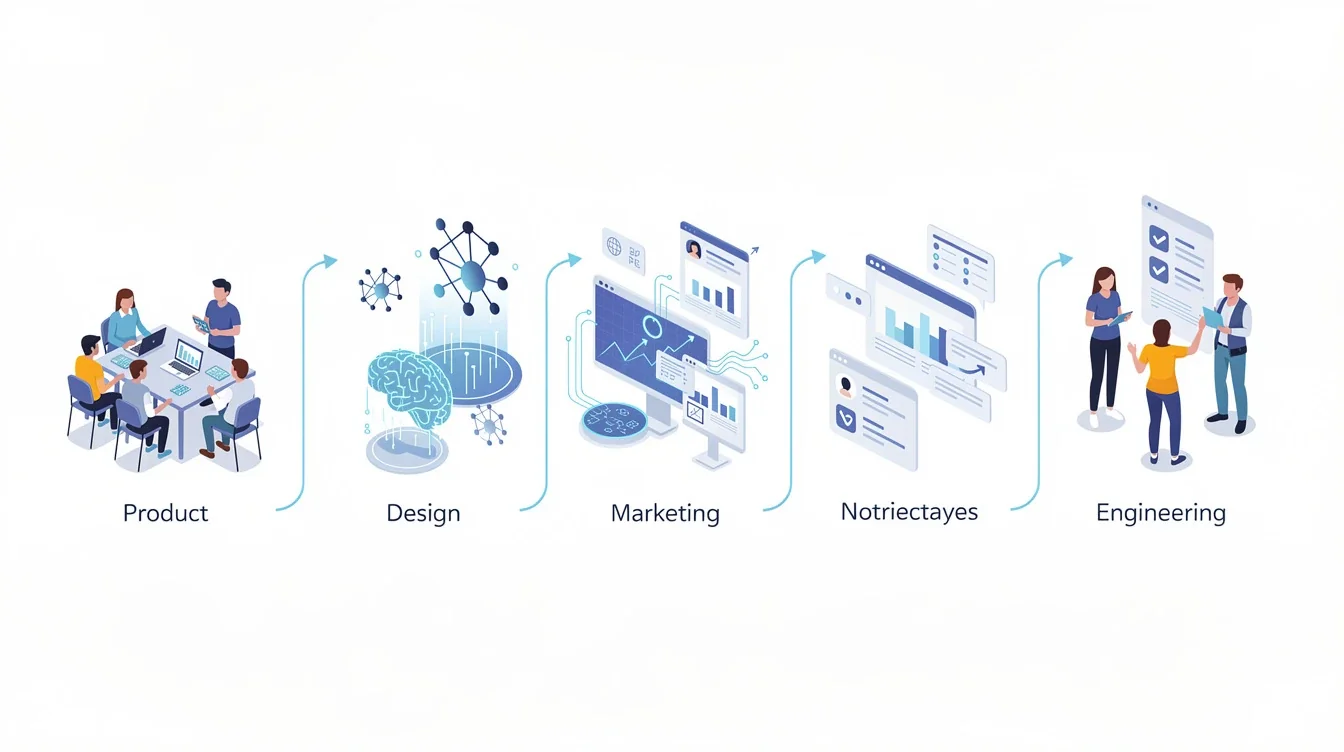
The best automation is invisible: it works quietly in the background, integrating with your existing tools and workflows. For startups, the key is to build a tech stack that’s flexible, scalable, and AI-friendly from day one.
Start with your core collaboration platforms—think Slack, Trello, Asana, or Jira—and explore their AI-powered integrations. Many modern SaaS tools offer out-of-the-box automation features, from smart scheduling and reminders to automated document generation and data enrichment. For development teams, AI-driven code review and testing tools can catch bugs before they hit production, speeding up release cycles and reducing costly errors.
When off-the-shelf tools aren’t enough, consider custom automation. Platforms like Zapier, Make, and n8n let you stitch to gether workflows with minimal code, while AI APIs from providers like OpenAI or Google Cloud can power more sophisticated automations, such as natural language processing, sentiment analysis, or predictive analytics.
Pro tip: Choose tools that offer robust APIs and strong documentation to future-proof your automation strategy and avoid vendor lock-in.
Automating MVP Launches and Iteration
Launching your Minimum Viable Product (MVP) isn’t just about shipping fast—it’s about learning fast. AI-powered automation accelerates both. Automated analytics tools can track user behavior, flag churn risks, and surface actionable insights without manual data crunching. AI-driven user feedback analysis can summarize qualitative feedback at scale, helping product and design teams prioritize fixes and features.
For growth teams, AI can automate lead qualification, personalize onboarding emails, and even run A/B tests on landing pages, freeing marketers to focus on creative strategy rather than campaign logistics. The tight feedback loops enabled by automation mean you can iterate faster, validate assumptions sooner, and pivot with confidence.
Pro tip: Use AI to monitor MVP usage in real time, setting up alerts for key metrics like signups, retention, or feature adoption. You’ll catch red flags early and impress investors with your data-driven approach.
Managing Overseas Teams with AI Automation
Digital Minds has long championed the power of reliable overseas teams. But managing distributed talent comes with its own challenges—time zones, language barriers, and handoff delays. AI-powered automation smooths these friction points.
AI-driven project management tools can automatically update task statuses, generate daily standup summaries, and surface blockers for team leads, regardless of where team members are located. Translation bots can bridge language gaps in real time, while AI-powered knowledge bases ensure everyone has access to the latest documentation and best practices.
For support and success teams, AI can analyze chat logs to identify training gaps or emerging issues, enabling proactive coaching and faster resolution times. The result? True “follow the sun” development and support, with fewer miscommunications and more consistent delivery.
Pro tip: Automate meeting scheduling and handoffs across time zones with AI-powered calendar tools, so your overseas teams stay in sync without late-night calls or endless email threads.
Measuring ROI: Proving Automation’s Value
For cost-conscious founders and product leaders, every investment must be justified. The good news? AI-powered automation delivers measurable ROI, often within weeks of deployment. You’ll see it in reduced cycle times, lower error rates, improved customer satisfaction, and, most importantly, happier, more focused teams.
Beyond hard metrics, automation drives long-term value by fostering a culture of continuous improvement. Teams get used to experimenting, iterating, and optimizing workflows—fundamental habits for any startup aiming to scale. The key is to track baseline metrics before you automate, then measure improvements regularly. Celebrate wins, document lessons learned, and keep looking for new areas to streamline.
Pro tip: Set up simple dashboards to track the time and cost savings from each automation, and share results widely—nothing boosts adoption like seeing real results.
Conclusion
AI-powered automation isn’t a silver bullet—it’s a strategic advantage for startups willing to invest thoughtfully. By automating the right tasks, you’ll empower your cross-functional teams to collaborate seamlessly, move faster, and stay focused on what matters most: building products users love. At Digital Minds, we believe the future of startup success lies in smart automation, global collaboration, and relentless experimentation. Ready to put AI to work for your team? Start small, measure often, and scale what works. The future is automated—and it’s brighter than ever.